Title washing is when a salvage, flood, or junk brand is stripped from a vehicle’s title by retitling it in a state with weaker disclosure rules, making a damaged car look “clean.” You catch it by pulling an NMVTIS-based vehicle report, matching the VIN in three physical locations, checking the title-transfer timeline for rapid out-of-state moves, and physically inspecting the car for repair and water-damage signs the paperwork doesn’t mention. No single check is conclusive on its own — it’s the combination that exposes a washed title.
Why This Matters
A single title brand — salvage, flood, junk, rebuilt — can cut a vehicle’s resale value by 20–40% and make it harder to insure or finance. That’s exactly the incentive for a small number of sellers to move a damaged car through a state with looser title-reporting requirements and get a fresh, “clean” title issued. The brand itself is federally recorded and permanent once reported to NMVTIS. However, not every state reports consistently or promptly, which is the gap title washing exploits.
The Checklist: 6 Steps to Check for Title Washing
Step 1: Match the VIN in Three Places
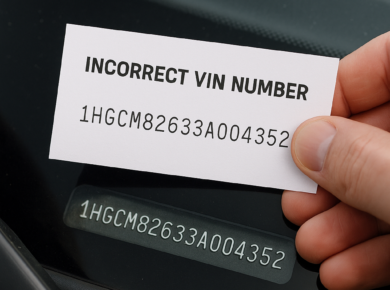
Read the 17-character VIN directly off the vehicle. You can find it at the lower driver-side corner of the windshield or the driver-side door-jamb sticker. Then compare it against the title, registration, and any listing or paperwork the seller hands you. All of them must match exactly. A mismatch, an added or altered character, or a VIN plate that looks re-riveted or replaced is a stop-the-process red flag on its own.
Step 2: Pull an NMVTIS-Based Vehicle History Report
This is the single most effective check, because it’s the one source that retains every brand ever reported by any state. Even after a cleaner title was issued elsewhere. A ClearVin report checks the VIN against NMVTIS and shows the full title-brand history, prior salvage auction sales (including auction photos where available), and odometer readings across owners. The exact record a washed title is designed to hide.

Cross-check the result against the NICB’s free VINCheck tool as well. It draws from insurer-reported theft and total-loss claims, a different data source than NMVTIS. Therefore, the two together cover more ground than either alone.
Step 3: Review the Title-Transfer Timeline
Look at how many times the title has changed hands and where. Three or more transfers across different states within about 12 months is a recognized warning pattern. Especially, when one of those states is known for hurricane or flood activity (Florida, Texas, Louisiana are common origins) and the transfer happened shortly after a major storm. A single out-of-state move isn’t automatically suspicious. However, a seller who can’t explain why the car moved, or when, is worth pressing further.
Florida Title Check | Texas Title Check
Step 4: Inspect the Vehicle for Damage the Paperwork Doesn’t Mention
Physically check what a clean title implies shouldn’t be there:
- Mismatched paint, overspray on trim or rubber seals, or visible repainting
- Uneven panel gaps or a hood/trunk that doesn’t sit flush
- Musty odor, water stains, or rust on seat rails, seatbelt retractors, or under the carpet
- Sand or silt behind the dashboard or inside door panels — a classic flood-damage sign
- Corrosion on unpainted metal parts
Step 5: Compare the Price to Market Value
A price meaningfully below comparable listings for the same year, make, model, and mileage is one of the most consistent signals across title-washing cases. It doesn’t confirm anything by itself, but a below-market price paired with any red flag from steps 1–4 is reason to slow down, not speed up.
Step 6: Examine the Physical Paperwork
Look for inconsistent fonts, visible erasures, misaligned printing, or a title document that feels unusually thin or reprinted. A legitimate title reissue leaves a documented paper trail through the state DMV — ask to see it, and be cautious of a seller who avoids the question or rushes the sale. If two or more of these checks raise a flag, walk away from the deal. Consider reporting the VIN to your state DMV or the NICB (800-TEL-NICB) so it can be flagged for other buyers.
Frequently Asked Questions
What is title washing? Title washing is the illegal practice of retitling a vehicle in a state with weaker brand-disclosure rules to remove a salvage, flood, junk, or rebuilt brand from its paperwork, making a previously damaged car appear to have a clean title.
Is title washing illegal? Yes. It’s a form of fraud under both state and federal law. NMVTIS exists specifically to defeat it by retaining every brand any state has ever reported against a VIN.
Can a vehicle history report always catch title washing? No single report guarantees it, since state reporting into NMVTIS isn’t uniform in speed or completeness. An NMVTIS-sourced report is the most reliable single check available. Pairing it with the physical inspection and paperwork checks above significantly improves your odds of catching a washed title before you buy.
What’s the difference between the NICB’s free VINCheck and a paid vehicle history report? NICB VINCheck is a free tool that checks whether a VIN was reported stolen and unrecovered or declared a total loss by a participating insurer — a narrower, insurer-sourced dataset. A paid NMVTIS-based report like ClearVin’s pulls the full state-reported title-brand history, salvage auction records, and odometer readings, which is a broader and more direct check against title washing specifically.
What should I do if I already bought a title-washed vehicle? Document everything — the title, any history report you ran, photos of the damage — and report it to your state DMV and the NICB. Depending on your state and the seller type, you may also have legal remedies through consumer protection or lemon laws. A local consumer-protection attorney can advise on options specific to your purchase.