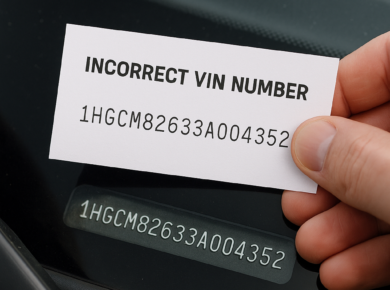
The seller had a great story. One owner, garage-kept, never in an accident. The 2019 Toyota Camry looked clean, drove well, and was priced $3,000 below market.
Then the buyer ran a VIN check. The VIN belonged to an identical Camry registered in Oregon — a car that was still on the road with a different owner. The vehicle in front of him was stolen, re-plated with a cloned VIN, and about to be sold to an unsuspecting buyer for $19,000 cash.
He walked away. The seller disappeared. The car was eventually recovered by police. That VIN check cost $17.99. It saved him from losing his car, his money, and months of legal complications.
Why Fake VINs Are More Common Than You Think
VIN tampering is one of the most underreported forms of automotive fraud in the United States. According to the National Insurance Crime Bureau (NICB), vehicle theft remains a significant problem — with over 1 million vehicles stolen in the U.S. in 2023 alone, the highest figure in nearly two decades.
A large number of those vehicles eventually surface in the used car market with altered or cloned VINs. Fraudsters use two primary methods:
VIN Cloning is the most sophisticated approach. The thief identifies a legitimately owned vehicle — same make, model, year, and color as the stolen one — and copies its VIN. Because the cloned VIN belongs to a real, clean vehicle, it passes basic checks that don’t go deep enough to catch the duplication.
VIN Plate Swapping is more direct. Plates from junked or totaled vehicles are physically removed and attached to stolen cars. The stolen vehicle then carries a VIN associated with a scrapped car — one that won’t appear in theft databases because it was never reported stolen.
In both cases, the goal is the same: make the stolen vehicle look legitimate long enough to complete a sale. And it works because most buyers don’t know how to verify a VIN beyond a visual check. Here’s how to do it properly.
Step 1: Use a VIN Decoder
The first step in verifying any VIN is decoding it — pulling the factory-original specifications that should match the physical vehicle in front of you.
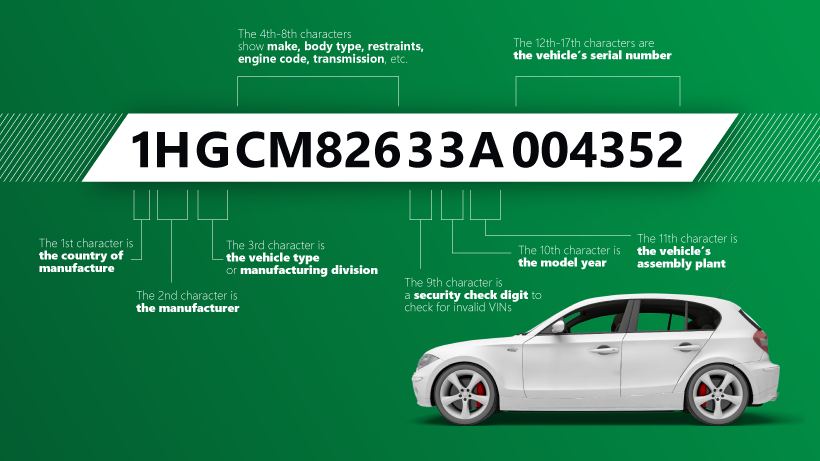
A VIN Decoder breaks down all 17 characters of the VIN into readable information: manufacturer, country of origin, engine type, body style, model year, assembly plant, and production sequence. Think of it as the car’s birth certificate — the record of exactly what it was when it left the factory.
For more precise evaluation you can use window sticker. It usually contains original color and more precise trim level that free tools.

What to compare:
Run the decoder and then verify each spec against the actual vehicle. The engine type should match what’s under the hood. The body style should match the vehicle’s configuration. The model year encoded in the 10th character should match the year on the title.
Real example of what a mismatch looks like:
A buyer decoded a VIN on a 2020 Honda CR-V listed for $24,500. The decoder returned: engine type: 1.5L turbocharged inline-4. The vehicle had a 2.4L naturally aspirated engine — a completely different powertrain. Either the wrong VIN plate was attached, or someone had swapped the engine. Either way, the vehicle’s identity didn’t match its specs.
ClearVin‘s free VIN decoder pulls factory-original specifications instantly — no account required. It’s the fastest first check you can run before investing time in a test drive or inspection.
Step 2: Validate the Check Digit
This step takes 30 seconds and can immediately flag a fabricated VIN.
The 9th character of every VIN is a check digit — a number calculated mathematically from the other 16 characters using a specific formula set by NHTSA. If someone fabricates or alters a VIN without recalculating this digit, the math won’t work out.
Free online VIN validators perform this calculation automatically. Enter the 17-character VIN and the tool tells you whether the check digit is valid for the rest of the sequence.
A failed check digit means one of three things:
- The VIN was transcribed incorrectly (typo by seller or listing)
- The VIN plate has been altered
- The VIN was fabricated entirely
Any of these outcomes requires investigation before proceeding.
Note: Check digit validation only confirms whether the VIN is mathematically plausible — not whether it belongs to this specific vehicle. It’s a necessary first filter, not a final answer.
Step 3: Inspect Every VIN Location in Person
Online tools verify what the records say. Physical inspection verifies what the car is hiding.
Federal regulations require the VIN to appear in multiple locations on every vehicle. For cars and light trucks, the mandatory locations are the dashboard (visible through the windshield from outside), the driver-side door jamb certification label, and the engine block. Trucks and larger vehicles also carry the VIN on the frame rail.
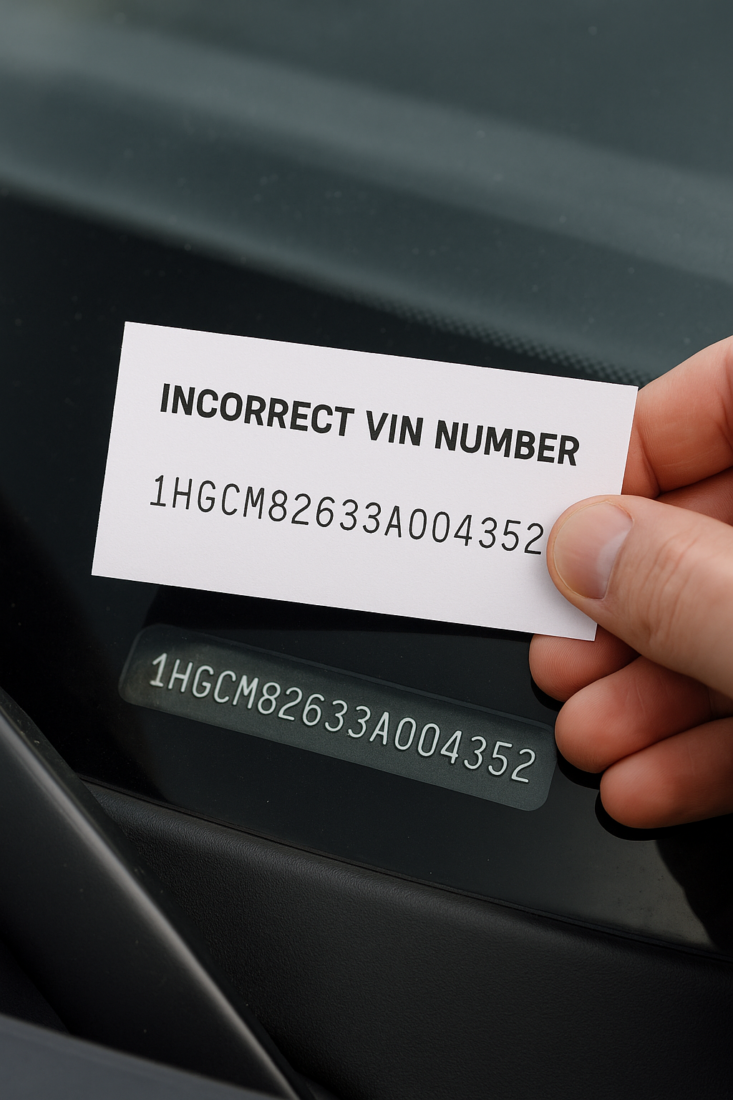
Every location should show an identical 17-character VIN. A single character difference between locations is a serious red flag.
Beyond matching VINs, look for physical evidence of tampering at each location. Around the dashboard VIN plate, check for scratches, tool marks, or abrasion near the rivets — signs the plate was removed and replaced. The rivets themselves should match the manufacturer’s standard for that vehicle: same size, same material, same finish. Aftermarket rivets are a frequent giveaway.
On the door jamb sticker, look for signs the label has been peeled and re-applied: lifting edges, adhesive residue, or a sticker that sits slightly askew from where it should be. Also check whether the windshield shows signs of removal and reinstallation — a disturbed seal or uneven butyl around the glass edge can indicate a windshield was pulled to access the dashboard VIN plate beneath it.
If you notice any of these signs, don’t dismiss them as cosmetic wear. Bring the vehicle to a trusted mechanic or licensed vehicle inspection service before proceeding. Experienced technicians know exactly what factory VIN installations look like and can identify substitutions the average buyer would miss.
Don’t have the VIN from the listing? ClearVin’s free license plate lookup retrieves the VIN associated with any U.S. license plate — useful when the VIN isn’t visible or the seller is reluctant to provide it upfront.
Step 4: Run a Comprehensive VIN History Check
Physical inspection tells you what you can see. A VIN history check tells you what happened before you showed up.
When a vehicle is stolen, declared a total loss, or flagged with a salvage or junk designation, that event is recorded in the National Motor Vehicle Title Information System (NMVTIS) — the federal database maintained by the U.S. Department of Justice and fed by DMVs, insurance companies, and salvage yards across all 50 states.
ClearVin is an authorized NMVTIS data provider, which means reports accessed through our platform draw from the same official government records used by law enforcement, insurance companies, and state DMVs — not crowd-sourced or self-reported data.
What a ClearVin VIN check reveals:
A stolen vehicle report tells you whether the VIN — or the vehicle it belongs to — has been flagged in national law enforcement databases. In VIN cloning cases, the cloned VIN will often show as “not stolen” because it belongs to a legitimately owned vehicle. This is why the full history check matters: you’re looking for inconsistencies between the vehicle’s recorded history and its physical characteristics, not just a stolen flag.

Title brands tell you whether the vehicle has ever been designated as salvage, junk, rebuilt, flood-damaged, or a lemon law buyback — in any state, at any point in its history. A vehicle that was totaled in Louisiana, rebuilt in Texas, and re-titled in Nevada will carry all three events in its NMVTIS history regardless of what the current Nevada title shows.

Odometer records pull mileage readings from DMV registrations, state inspections, and service records across the vehicle’s history. A vehicle showing 42,000 miles on the odometer but 78,000 miles in its last DMV record is a clear rollback — and a clear sign that someone has been manipulating more than just the mileage.

Ownership history shows how many previous owners the vehicle has had, how long each kept it, and which states it was registered in. A vehicle that’s been through four owners in three years, registered in four different states, should raise questions about why it kept changing hands.

Insurance claim records show prior accidents, damage severity, and whether repairs were completed — even when the seller says the car has “never been in an accident.”

Pricing:
- Single report: $19.99
- 5-report package: $28.99 ($5.80 each) — best value when comparing multiple vehicles
What to Do If You Suspect VIN Tampering
If any of the steps above surface inconsistencies — a failed check digit, mismatched VIN locations, suspicious physical signs, or a history that doesn’t align with the seller’s claims — do not complete the purchase.
Report suspected VIN fraud to:
NICB (National Insurance Crime Bureau) Online at nicb.org/how-we-help/report-fraud. The NICB works directly with law enforcement and can cross-reference your report against active theft investigations.
Local law enforcement If you believe the vehicle in front of you is stolen, contact local police. They can run the VIN through law enforcement databases and, in some jurisdictions, conduct a physical VIN inspection on the spot.
The selling platform If you encountered the vehicle through an online marketplace (Craigslist, Facebook Marketplace, AutoTrader), report the listing. Most platforms have fraud reporting tools and will investigate and remove suspicious listings.
Quick Reference: VIN Verification Checklist
Before buying any used vehicle, work through these four steps in order:
1. Decode the VIN — Run it through ClearVin’s free decoder and verify factory specs match the physical vehicle.
2. Validate the check digit — Use a free VIN validator to confirm the 9th character is mathematically correct.
3. Inspect every VIN location — Dashboard, door jamb, engine block, frame. All must match. Look for physical tampering signs at each location.
4. Run a full history check — ClearVin’s NMVTIS report surfaces stolen records, title brands, odometer history, and ownership timeline.
If all four pass, you’re in a strong position to proceed. If any one of them raises a question you can’t resolve, walk away.
Verify Your VIN with ClearVin
ClearVin provides two tools that together cover every aspect of VIN verification:
Free VIN Decoder — Factory specs from manufacturer records. No cost, no account required.
Window Sticker by VIN – Precise trim level, color and safety features – $8.99 per VIN.
Full Vehicle History Report — NMVTIS data, theft records, title brands, odometer history, ownership timeline, and insurance claims.
Together, they give you the complete picture — what the vehicle was built as, and what happened to it since.
👉 Start your VIN check now: ClearVin.com
Free VIN decoder included | NMVTIS-authorized reports | Results in under 30 seconds | 100% money-back guarantee | No subscription required