A salvage title means an insurer declared the vehicle a total loss, and it cannot legally be driven or insured as-is. A rebuilt title means that same vehicle has since been repaired and passed a state safety inspection, making it road-legal again. Neither title brand ever fully disappears. Both are permanent, and both typically reduce resale value and complicate financing compared to a clean-title vehicle. ClearVin helps to check title by VIN and explain the difference.
Salvage Title vs. Rebuilt Title Compared
| Salvage Title | Rebuilt Title | |
|---|---|---|
| Legal to drive | No — not until repaired and re-inspected | Yes, once the title is reissued |
| Insurability | Usually cannot get comprehensive or collision coverage | Liability is widely available; comprehensive/collision is harder and often pricier |
| Typical premium impact | N/A (uninsurable) | 20–40% higher than a clean-title equivalent |
| Financing | Almost never financeable | Some lenders will finance a rebuilt title, often at a higher rate or with a larger down payment |
| Resale value impact | N/A (not yet resalable as-is) | 20–50% lower than a comparable clean-title vehicle |
| Title brand permanence | Permanent | Permanent (shows prior salvage history) |
| NMVTIS brand codes | 11, 49, 50 | 09 |
Salvage Title: What It Means
A vehicle gets a salvage title when an insurance company determines that repair costs exceed a set percentage of the car’s fair market value — a total loss. That threshold isn’t universal. Most states use somewhere between 60% and 80% of the vehicle’s value, but a few outliers exist. Texas effectively uses a 100% threshold, while Iowa’s threshold is closer to 50%, so the same accident can total a car in one state and leave it repairable in another.
In its current state, a salvage-title vehicle is not legal to drive or register on public roads in nearly every state, and standard auto insurers won’t write comprehensive or collision coverage on it. This is the title brand you’ll see most often on vehicles listed at salvage auctions — cars that were in a serious collision, a flood, a fire, or were reported stolen and later recovered.

The title brand itself is permanent. Once a state DMV reports a “salvage” or “junk” brand to the National Motor Vehicle Title Information System (NMVTIS). This record stays attached to the VIN for the life of the vehicle, even if the car is later retitled in a different state.
Rebuilt Title: What It Means
A rebuilt title (sometimes called “reconstructed”) is issued after a salvage vehicle has been repaired and passed a state-mandated inspection confirming the repairs are sound, the VIN is correctly matched, and no stolen parts were used. Once that inspection is passed, the title is reissued — no longer “salvage,” but permanently marked “rebuilt.” That distinction matters in practice: a rebuilt-title car can be legally registered, insured, and driven like any other vehicle. But the title brand doesn’t erase the history — it discloses it. Buyers, insurers, and future resale offers will always see “rebuilt” on the title and price the vehicle accordingly.
Inspection requirements vary significantly by state. Some states (Georgia, Florida) have relatively straightforward processes. Meanwhile, others (California, New York) require extensive documentation, receipts for parts and labor, and multiple inspection points before a rebuilt title is issued.
California Title Check | Georgia Title Check | Florida Title Check | New York Title Check
Which Is the Better Buy?
Neither title brand is inherently “better” — the right answer depends on what you’re trying to do. A salvage title only makes sense if you’re the one doing the repair work, or you’re buying strictly for parts. You cannot drive it home, you cannot get standard insurance on it, and most lenders won’t touch it. It’s a project, not a car — appropriate for mechanics, rebuilders, and buyers with a clear repair plan and a state inspection already mapped out.
A rebuilt title is the more practical buy for someone who wants a road-legal car today at a discount. The vehicle has already cleared inspection, it can be insured (at least for liability), and some lenders will finance it. The trade-off is resale value: you’re buying at a discount because the next buyer will apply the same discount to you.
What both title brands share is risk that depends entirely on the quality of past repairs. A rebuilt title tells you a car passed inspection. However, note that it doesn’t tell you whether the frame was properly straightened, whether airbags were correctly replaced, or whether the repair was cosmetic rather than structural. That’s a case for an independent mechanical inspection before you buy either type, regardless of what the title says.
Where to Find Salvage Vehicles
If a salvage title fits your plan — you’re a rebuilder, a mechanic, or you’re sourcing parts — the vehicles themselves mostly move through insurance auctions like Copart and IAA, which aren’t open to the public by default. AutoBidMaster is a licensed broker that gives individual buyers (no dealer license required) access to both auction networks in one place. They offer used car buying along with VIN verification and shipping services. It’s a practical starting point if you’re shopping for a specific salvage or rebuildable vehicle rather than browsing local listings.
Always Run a VIN Check Before You Buy Either Type
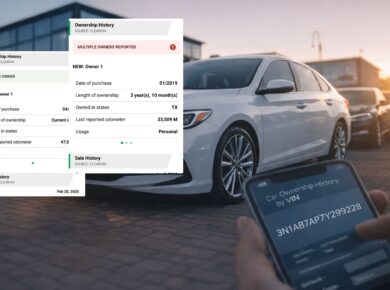
Because title brands are state-reported and title washing — moving a branded vehicle to a state with looser disclosure rules to obtain a cleaner-looking title — remains a real risk, the title in hand isn’t always the full story. A ClearVin report pulls the vehicle’s full NMVTIS brand history. With report you can confirm a “clean” title was never actually salvage or junk in another state, and see the auction photos and sale records behind a rebuilt vehicle’s repair history before you commit. For $17.99 per report, it’s a small check against a purchase that can run into the thousands.
Frequently Asked Questions
A salvage title is more restrictive in the short term because the vehicle can’t legally be driven or insured until repaired. A rebuilt title is drivable but still carries a permanent brand that limits insurance options, financing, and resale value. Therefore, “worse” depends on whether you’re evaluating the car today or over its resale lifetime.
Sometimes, but not always. Many insurers offer only liability coverage on rebuilt-title vehicles. Those offering comprehensive or collision coverage often charge 20% to 40% more than for a clean-title equivalent.
Salvage-titled vehicles are almost never financeable through traditional lenders. Rebuilt-title vehicles can sometimes be financed, but many mainstream lenders decline them. Buyers often need cash or a specialty lender at a higher rate.
No. Once a vehicle is branded salvage and later rebuilt, both the salvage history and the rebuilt brand remain on the title permanently. The vehicle can never return to clean-title status.
Some lenders will, though often with a higher interest rate, a larger down payment, or both. Salvage-title vehicles are much harder to finance through a standard auto loan since they aren’t legally drivable in their current state.
Title washing is the practice of retitling a branded vehicle in a state with looser disclosure rules to strip the salvage or rebuilt brand from the paperwork. Because NMVTIS retains every brand ever reported by any state, an NMVTIS-sourced vehicle history report will surface a washed brand even when the state title in hand looks clean.