Many shoppers use an online vehicle history report before buying a used car, but the number of fake services continues to grow. To avoid losing money and making a risky purchase, it’s important to understand how these scams work and what signs to look for.
Why Scammers Target These Reports
A real vehicle history report pulls data from trusted sources such as accident records, title agencies, insurance companies, and recall databases. Because this information can reveal serious issues — like total loss history, odometer rollbacks, or flood damage — scammers try to imitate official reports while providing incomplete or fabricated data. Their goal is to attract buyers with cheap or “instant” results that look official but lack verified information.
Common Types of Report Scams
1. Fake “Free” Results
Many fraudulent vehicle history services claim to offer a free car vehicle history report. The pattern is predictable: a few generic lines appear quickly, followed by a paywall. These pages often hide fees until the last step or push recurring charges. Always check the true vehicle history report cost before entering payment information.
2. Inaccurate or Fabricated Data
Some sites generate a vehicle’s history report using random or recycled entries. A fraudulent report may list fictional maintenance records, impossible mileage patterns, or missing accident history. A trustworthy vehicle history report for used cars should show consistent information across all sections.
3. Misleading Plate-Based Lookups
A common VIN lookup scam involves promising instant, full results from a license plate alone. While limited plate searches are possible in certain states, complete and accurate data requires the VIN. Sites claiming otherwise may be offering incomplete or misleading reports.
4. Title Washing Scams
Some platforms claim to reveal hidden title brands but actually promote title washing, where salvage or flood titles are disguised as clean through false state-to-state record changes. A legitimate provider always shows where title updates occurred and flags inconsistencies.
5. Cloned VIN Reports
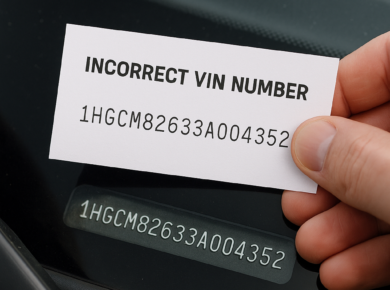
In some cases, scammers use a real vehicle’s VIN to generate a “clean” report for a different damaged or stolen car. A cloned VIN scam produces a report that appears legitimate but belongs to an entirely different vehicle.
6. Fake NMVTIS References
Fraudulent services sometimes claim to use NMVTIS data without being approved providers. If a site references NMVTIS but does not appear on the official distributor list, it is not reliable.
7. Phishing-Style Report Scams
These look like standard report websites but are designed to collect credit card data, phone numbers, or email addresses. They may offer a fake vehicle report example as a preview, but never deliver real results.
These emerging scam types highlight why buyers should verify where the data comes from—not just how a report looks.
What a Reliable Report Should Show

A legitimate report pulls information from National Motor Vehicle title sources, insurance databases, and manufacturer recall systems. When researching how to obtain a vehicle history report or how to get a vehicle history report, look for providers that offer:
- Verified title history
- Documented accident records
- Accurate odometer readings
- Open recalls tied to the VIN
- Clear ownership history
- Details about total loss or salvage brands
- Service information when available
This type of data helps car buyers understand the full condition of the vehicle and supports a good pre-purchase inspection.
How to Choose a Safe Provider
Instead of vague promises or flashy ads, a trustworthy provider, e.g., NMVTIS, NICB, offers transparency: sample reports, clear pricing, verified data partners, and explanations of how records are updated.
To make the differences easier to spot, here is a practical comparison on how to verify a real VIN report and provider:
Reliable Provider vs. Suspicious Platform
| Feature | Reliable Provider | Suspicious / Scam Platform |
| Data Sources | Identifies official sources (title agencies, insurance records, NMVTIS, OEM recalls) | Vague or no information about data partners. Some websites use greyed-out or modified logos because they don’t have the rights to display the official brand marks. |
| Sample Reports | Provides full examples before purchase | No samples or only generic templates |
| Pricing Transparency | Clear, upfront pricing | Hidden fees, misleading “free” claims. Reports for $1. |
| VIN Accuracy | VIN-specific data with consistent entries | Random or recycled data; mismatched details. Poor report previews with stock images. |
| Website Security | HTTPS, clear company details, real customer support | No contact information, unsecured pages |
| Update Frequency | States how often records are refreshed | No updated information or outdated entries |
Using a table like this should help you quickly identify red flags when evaluating unfamiliar platforms.
Staying Safe When Buying a Used Car

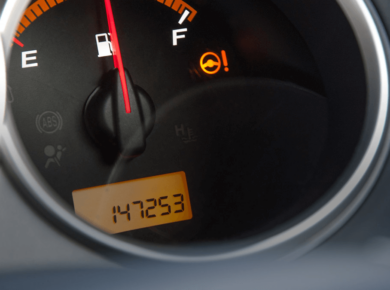
Buying a used car requires careful research. A good history check is an important part of that process. Always verify the VIN yourself instead of relying on screenshots sent by private sellers. Compare the information with the vehicle’s condition during your inspection. Look for inconsistencies in ownership history, title brands, and mileage, as this can indicate VIN tampering or odometer rollback.
Avoiding vehicle history report scams improves your chances of finding a reliable vehicle at a fair price. By choosing trusted sources and understanding how these checks work, you can protect yourself and feel more confident in your purchase.
How ClearVin Protects Users from Scams
ClearVin was created to offer a transparent, dependable alternative to the unreliable services found online. Here’s how it keeps users safe:
Free Tools Available
ClearVin provides helpful free resources, such as:
- Basic VIN decoding
- Limited vehicle specifications
- Preliminary checks that verify whether a VIN is valid
These tools help users confirm key details before deciding whether they need a full report.
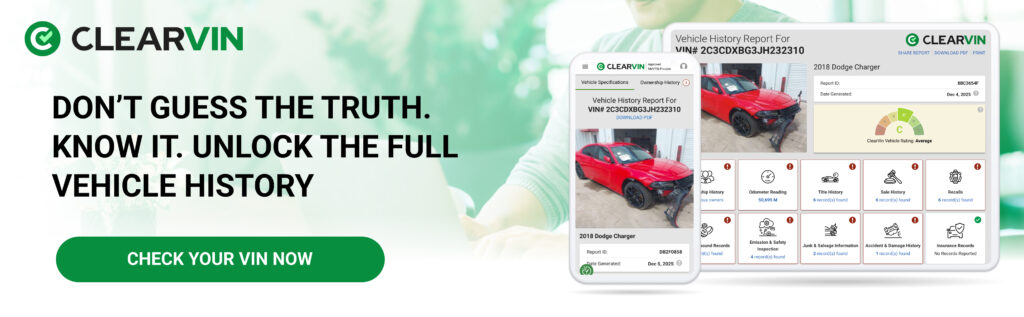
What’s Included in Full ClearVin Reports
ClearVin’s complete vehicle history reports include:
- Title records and brand history
- Insurance-reported accidents
- Total loss declarations
- Odometer and mileage data
- Theft records
- Open recalls
- Sale history when available
- Consistent, VIN-specific entries from verified sources
This gives buyers a complete, accurate picture before making a purchase decision.
How ClearVin Differs From Fake or Unreliable Services
ClearVin stands apart through:
- Verified data partners, including NMVTIS
- Transparent pricing with no hidden fees
- Detailed sample reports available to preview
- Clear support channels and real business information
- Accurate VIN-based lookups, not plate-only shortcuts
- Secure site infrastructure to protect user data
- Safe checkout with multiple payment options
By choosing a safe VIN check provider like ClearVin, users avoid misleading platforms and gain confidence in every step of their vehicle research.