The $45,000 mistake that could have been avoided with a $10 VIN check. A Texas contractor bought a 2019 Ford F-350 diesel from a private seller. The truck looked solid: clean body, strong engine, reasonable mileage. He handed over $45,000 cash.
Two weeks later, his mechanic discovered the transmission had been rebuilt twice due to severe towing damage. The frame had hairline cracks from overloading. The odometer had been rolled back 78,000 miles.
A simple truck VIN lookup would have revealed all of it before he signed anything.
Whether you’re buying a work truck for your business, a heavy-duty pickup for towing, or a commercial semi for your fleet, a truck VIN lookup is your first line of defense against expensive problems hidden beneath a fresh coat of paint.
This guide shows you exactly how to check used truck history, what to look for, and how to avoid the costly mistakes that trap thousands of buyers every year.
What Is a Truck VIN Lookup?
Every truck manufactured since 1981 is assigned a unique 17-character Vehicle Identification Number (VIN) at the factory. This VIN serves as the truck’s permanent fingerprint, a code that follows it from the assembly line through every owner, accident, repair, and registration. Think of it like a Social Security number for vehicles. No two trucks share the same VIN.
What’s Encoded in a Truck VIN?
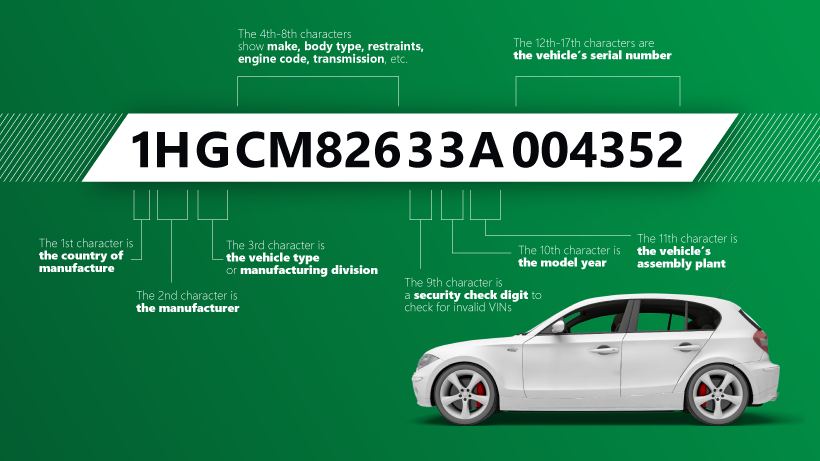
Those 17 characters aren’t random. Each position tells you something specific:
Characters 1-3: World Manufacturer Identifier (WMI)
1FT= Ford truck, USA1GC= GMC/Chevy truck, USA3C6= RAM truck, Mexico
Characters 4-8: Vehicle Descriptor Section
- Engine type, body style, cab configuration, GVWR class
Character 9: Check digit (security verification)
Character 10: Model year
M= 2021,N= 2022,R= 2026
Character 11: Assembly plant
Characters 12-17: Unique serial number for that specific truck

What a Truck VIN Lookup Reveals
When you run a truck VIN number check, you’re accessing databases that track:
- Complete ownership history – How many owners, how long each kept it
- Usage type – rental, fleet, personal usage types
- Accident and damage records – Insurance claims, collision reports, airbag deployments
- Title status – Clean, salvage, rebuilt, flood-damaged, lemon law
- Odometer readings – Verified mileage from DMV, inspections, service records
- Service and maintenance history – Oil changes, major repairs, dealer visits
- Lien and loan records – Outstanding debts tied to the vehicle
- Theft status – NICB stolen vehicle database check
- Commercial use designation – Fleet, rental, taxi, personal use
- Recall information – Open safety recalls from manufacturer
- Specifications verification – Engine, transmission, towing capacity, GVWR
This isn’t guesswork, it’s official data from DMVs, insurance companies, auction records, and service shops across all 50 states.
Why You MUST Run a Truck VIN Lookup Before Buying
Trucks get worked hard. They tow trailers, haul loads, rack up miles faster than cars, and often operate in tough conditions—construction sites, farms, oil fields, cross-country routes. That wear and tear creates problems sellers don’t always disclose.
The Hidden Problems a VIN Check Reveals
1. Accident and Frame Damage
Why it matters for trucks: Frame damage from overloading or collision compromises towing capacity and safety. A bent frame means the truck can never safely tow its rated capacity again.
Real example: A 2018 Chevy Silverado 2500 listed for $38,000 showed “minor rear damage” in photos. VIN check revealed a $15,000 insurance claim for rear-end collision with frame damage. The truck was totaled and rebuilt. Actual value: $22,000.
What to look for:
- Insurance claims over $10,000 (likely structural)
- “Frame damage” or “structural damage” in records
- Airbag deployment (indicates serious impact)
- Multiple accidents in short timeframe
2. Odometer Rollback Fraud
Why it matters for trucks: Commercial trucks accumulate 25,000-40,000+ miles per year. High mileage means worn engines, transmissions, and suspension. Sellers roll back odometers to inflate value.
Real example: A 2017 RAM 3500 showed 42,000 miles on the odometer. VIN check revealed DMV records showing 118,000 miles at last registration—a 76,000-mile rollback. Seller likely made $12,000+ extra from the fraud.
What to look for:
- Mileage that decreases between records
- Unusually low miles for truck’s age/use
- Wear on pedals, steering wheel, seats inconsistent with mileage
- Service records showing higher mileage than odometer
NHTSA estimates over 450,000 vehicles are sold annually with false odometer readings, costing buyers $1+ billion. Trucks are prime targets.
3. Commercial Fleet and Rental History
Why it matters: Fleet trucks, rental trucks, and commercial vehicles experience:
- Multiple drivers with varying skill levels
- Extended idling periods (hard on engines)
- Aggressive driving and heavy loads
- Minimal downtime for maintenance
- Higher wear per mile than personal-use trucks
Real example: A 2020 Ford F-250 listed as “one owner, personal use” for $41,500. VIN check showed it was actually a Enterprise rental truck for 2 years, then sold at auction. True value considering rental history: $34,000.
What to look for:
- Usage type: Fleet, Rental, Commercial vs. Personal
- Short ownership periods (rental companies flip quickly)
- High mileage in short timeframe
- Auction history (fleets sell through auctions)
4. Flood and Weather Damage
Why it matters: Flood-damaged trucks develop electrical gremlins, rust, mold, and mechanical failures that appear months or years after purchase. Modern trucks have complex electronics—water destroys them.
Real example: Hurricane Ian (Florida, 2022) and Hurricane Harvey (Texas, 2017) flooded over 1 million vehicles combined. Many were “cleaned up” and sold in dry states like Arizona, Nevada, and New Mexico with no disclosure.
A 2021 GMC Sierra bought in Phoenix for $52,000 showed clean title. VIN check revealed flood damage designation from Florida—title had been washed through Georgia. Truck developed electrical failures within 6 months.
What to look for:
- Title brands: Flood, Water Damage
- Registration transfers from flood-prone states (FL, TX, LA, NC) to dry states
- Insurance claims for “water damage” or “weather-related”
- Signs of water line in engine bay or interior
5. Title Problems and Liens
Why it matters: Outstanding liens mean someone else legally owns the truck until the loan is paid. You can’t get clear title. The bank can repossess it—even from you.
Real example: A buyer purchased a 2019 Dodge RAM 1500 for $36,000 from a private seller. When trying to register it, DMV flagged an active $28,000 lien from a credit union. The seller had never paid off the loan. The buyer couldn’t get title, couldn’t register it, and lost $36,000.
What to look for:
- Active liens with lienholder names
- “Not actual mileage” title brands
- Salvage, rebuilt, or junk designations
- Title washing (multiple state transfers in short period)
How to Check a VIN Number on a Truck (3 Methods)
Option 1: Ask the Seller
What to request:
- “Can you provide a vehicle history report?”
- “Do you have maintenance records?”
- “Are there any liens on the truck?”
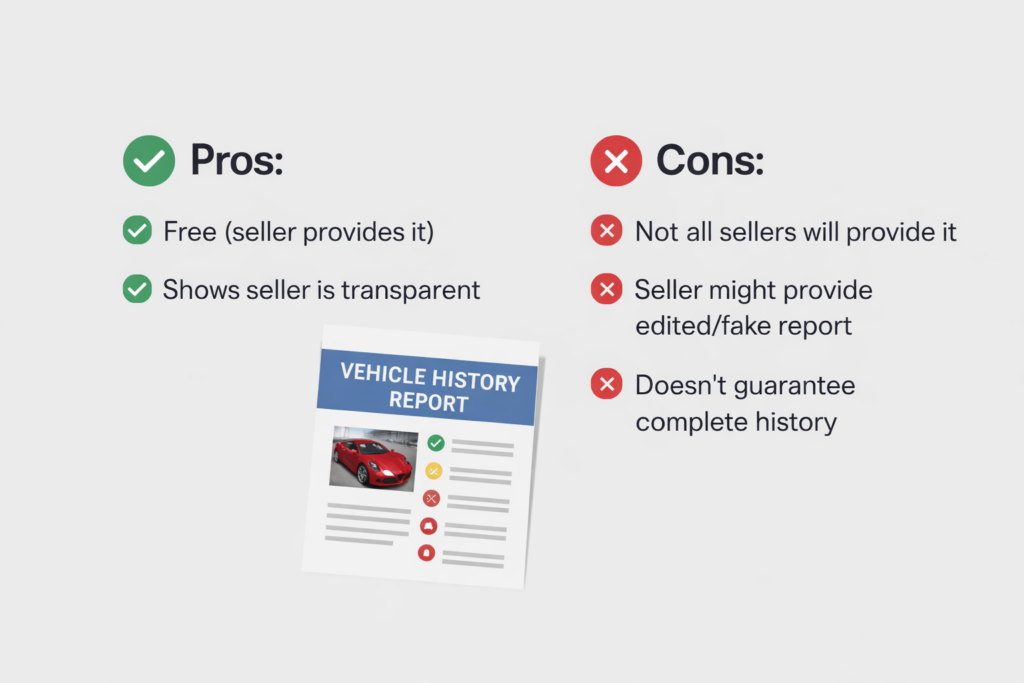
When to use this: Always ask, but never rely on seller-provided reports alone. Verify independently.
Option 2: Contact DMV or Government Sources
What you can get:
- Basic title status
- Registration history (sometimes)
- Lien information (in some states)
Pros:
- ✅ Official government records
- ✅ Usually free or low cost
Cons:
- ❌ Time-consuming (appointment, waiting, paperwork)
- ❌ Limited data (no accident history, no service records)
- ❌ Varies by state (inconsistent access)
- ❌ Requires in-person visit in many states
When to use this: If you’re buying locally and want to verify title/lien status directly with your state.
Method 3: Use ClearVin Online VIN Check (Recommended)
What you get:
- Complete accident and damage history
- Insurance claim records with dollar amounts
- Verified odometer readings across time
- Title status and brand history
- Lien and loan records
- Theft database check (NICB)
- Service and maintenance records
- Commercial usage history
- Recall information
- Auction history (if applicable)
- Real photos from auctions/sales
Pros:
- ✅ Instant results (10 seconds)
- ✅ Comprehensive data from 70+ sources
- ✅ NMVTIS-authorized provider (official government database)
- ✅ Works from anywhere (no DMV visit)
- ✅ Covers all 50 states
- ✅ Affordable ($9.99 single report, $5.80 per report in 5-pack)
Cons:
- ❌ Small cost (but far less than one mistake)
When to use this: Always. For every used truck you’re seriously considering.
How to Use ClearVin for Truck VIN Lookup (Step-by-Step)
Step 1: Locate the Truck’s VIN or Lot#
The VIN is stamped in several locations on trucks:
Most common locations:
- Driver-side dashboard (visible through windshield)
- Driver-side door jamb (sticker with VIN and specs)
- Title and registration documents
- Insurance card
Additional locations on trucks:
- Frame rail (usually driver side, near front wheel)
- Engine block (stamped on engine)
- Firewall or radiator support
Pro tip: Take a photo of the VIN from multiple locations to verify they all match. Mismatched VINs = fraud.
Step 2: Go to ClearVin.com
Navigate to ClearVin.com on any device—phone, tablet, or computer.
Step 3: Enter the VIN
Type or paste the 17-character VIN into the search box.
Double-check for common mistakes:
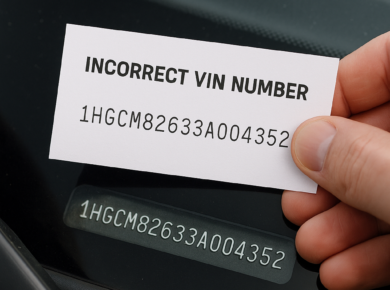
- VINs never contain the letters I, O, or Q (easily confused with 1 and 0)
- All VINs are exactly 17 characters (no more, no fewer)
- No spaces or special characters
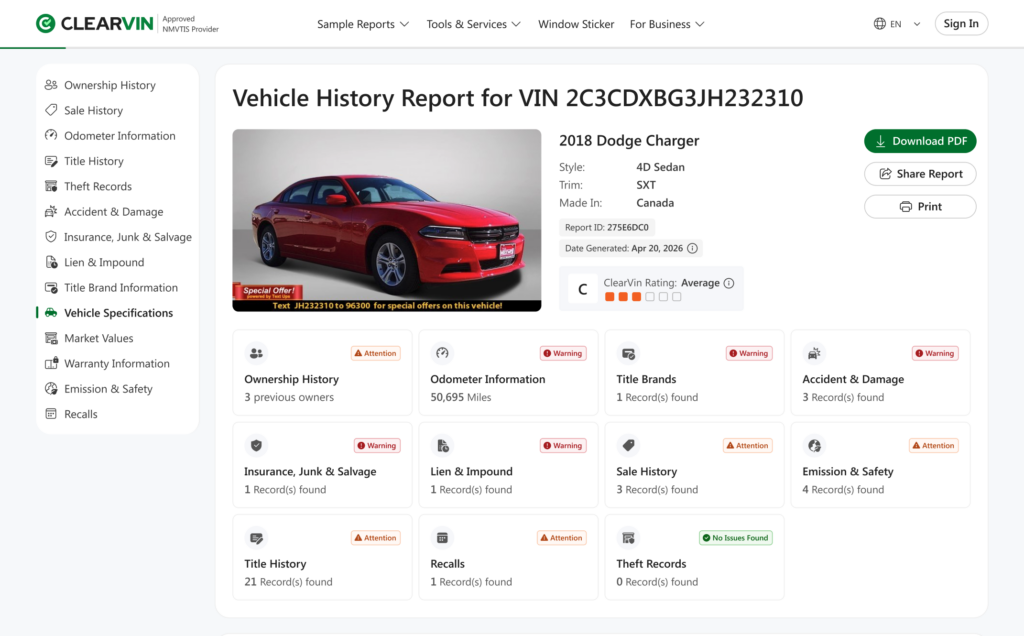
Step 4: Review Your Report
Within 10 seconds, you’ll receive a comprehensive truck history report showing:
📋 Title & Ownership
- Title status (clean, salvage, rebuilt, flood)
- Number of previous owners
- Ownership duration for each owner
- States where registered
💥 Accident & Damage
- Insurance claims with amounts
- Collision severity ratings
- Airbag deployment records
- Frame/structural damage indicators
🛣️ Odometer History
- Verified readings from DMV records
- Service shop mileage entries
- Rollback detection alerts
- Mileage consistency timeline
🔧 Service & Maintenance
- Oil change records
- Major repairs
- Dealer service history
- Recall completion status
🚨 Problems & Red Flags
- Active liens and lienholders
- Theft reports (NICB database)
- Flood or fire damage
- Commercial usage designation
- Auction history
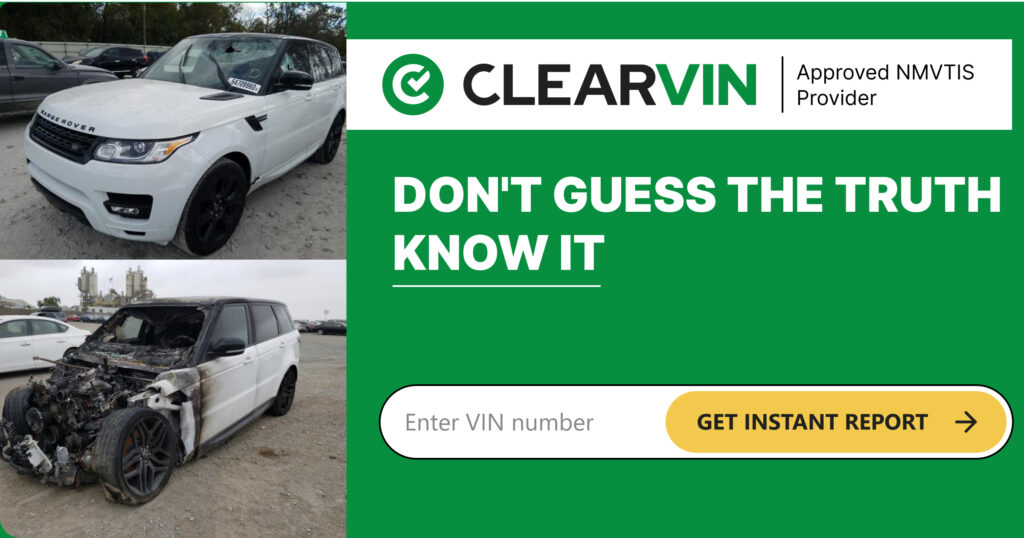
📸 Photos (when available)
- Auction photos showing damage
- Previous sale images
- Condition documentation
Step 5: Make Your Decision
Use the report to:
- Negotiate price based on issues found
- Walk away from problematic trucks
- Get pre-purchase inspection focused on specific concerns
- Verify seller claims match official records
What Makes ClearVin the Best Truck VIN Lookup Service?
1. NMVTIS-Authorized Provider
ClearVin is one of only a handful of companies officially authorized by the U.S. Department of Justice to access and distribute NMVTIS data (the national vehicle history database).
What this means:
- Same data source used by DMVs, law enforcement, and insurance companies
- 99%+ coverage of all U.S. vehicles
- Official government records, not crowd-sourced data
2. Comprehensive Truck-Specific Data
Unlike generic VIN check services, ClearVin provides truck-specific details:
✅ GVWR classification (light-duty, medium-duty, heavy-duty)
✅ Towing capacity verification
✅ Commercial usage history (fleet, rental, personal)
✅ Diesel engine details (for diesel trucks)
✅ Cab configuration (regular, extended, crew)
✅ Bed length specifications
✅ 4×4 vs. 4×2 drivetrain
Why this matters: Buying a “3/4-ton” truck listed with “12,000 lb towing capacity” when records show it’s actually a 1/2-ton with 7,000 lb capacity? That’s fraud—and dangerous if you’re towing heavy trailers.
3. Fast, Affordable, Transparent
Pricing:
- Single report: $17.99
- 2-report package: $23.99 ($11.99 each)
- 5-report package: $28.99 ($5.79 each) ⭐ Best Value
Compare to competitors:
- Carfax: $39.99 per report
- AutoCheck: $24.99 per report
ClearVin costs 50-70% less while providing the same comprehensive data. No subscriptions. No hidden fees. Pay once, access anytime.
4. Works for All Truck Types
ClearVin checks work for:
🚛 Commercial Trucks
- Semi-trucks and tractor-trailers
- Box trucks and cargo vans
- Dump trucks and flatbeds
- Delivery trucks (FedEx, UPS, etc.)
🚙 Pickup Trucks
- Light-duty (F-150, Silverado 1500, RAM 1500)
- Heavy-duty (F-250/350, Silverado 2500/3500, RAM 2500/3500)
- Diesel and gas engines
- All cab and bed configurations
🚐 Work Vans & Utility Vehicles
- Cargo vans (Ford Transit, Mercedes Sprinter, RAM ProMaster)
- Passenger vans
- Utility trucks with service bodies
Capacity Trucks VIN Lookup | Carriage VIN Lookup | Cargo Craft VIN Lookup | Chevrolet Trucks VIN Lookup | Isuzu Trucks VIN Lookup | JLG Industries VIN Lookup | Freightliner VIN Lookup | Frontier Cargo VIN Lookup | Fruehauf VIN Lookup | Ford VIN Lookup
Special Considerations for Commercial Truck Buyers
If you’re buying a commercial truck for your business, additional factors matter:
1. Commercial Vehicle Classification
Trucks are classified by GVWR (Gross Vehicle Weight Rating):
- Class 1-2: Up to 10,000 lbs (light-duty pickups)
- Class 3-5: 10,001-19,500 lbs (heavy-duty pickups, delivery trucks)
- Class 6-8: 19,501+ lbs (semi-trucks, dump trucks, cement mixers)
Why it matters:
- Different CDL requirements
- Different insurance costs
- Different tax treatment (Section 179 deductions)
- Different state registration fees
2. Hours of Service and Electronic Logging
Commercial trucks subject to FMCSA hours-of-service regulations may have:
- Electronic Logging Device (ELD) history
- DOT inspection records
- Driver logs (if available)
These records can reveal:
- How hard the truck was driven
- Whether it was properly maintained
- Compliance violations
Request these separately from the seller if buying a DOT-regulated truck.
3. State-Specific Commercial Regulations
States like California, New York, and Illinois have strict commercial vehicle requirements:
California example:
- Commercial trucks over 10,000 lbs must pass BIT (Biennial Inspection of Terminals) inspection
- CARB compliance for diesel emissions
- Different registration and tax rules
Verify the truck can be legally registered in your state before purchasing.
Real Truck VIN Check Success Stories
Case 1: The Fleet Truck Disguised as Personal Use
Truck: 2019 Ford F-150
Asking price: $32,500
Seller claim: “One owner, personal use, garage-kept”
ClearVin check revealed:
- ⚠️ Enterprise rental fleet for 18 months
- ⚠️ Multiple drivers, high wear
- ⚠️ Sold at auction with 68,000 miles
- ⚠️ Current odometer: 71,000 miles (only 3K miles in 2 years? Suspicious)
Outcome: Buyer negotiated down to $26,500 based on rental history, saving $6,000.
Case 2: The Salvage Title Cover-Up
Truck: 2020 RAM 2500 Diesel
Asking price: $48,000
Seller claim: “Clean title, minor cosmetic damage”
ClearVin check revealed:
- ⚠️ Salvage title from Colorado (hail damage)
- ⚠️ Rebuilt in Texas
- ⚠️ Title transferred to Oklahoma (title washing)
- ⚠️ Now listed as “clean” (illegal title washing)
Outcome: Buyer walked away. Truck later sold for $29,000 to someone who likely didn’t check.
Fraud avoided: $19,000 overpayment
Common Truck VIN Lookup Questions
Q: How accurate are ClearVin truck reports?
A: ClearVin reports are based on official data from:
- NMVTIS (National Motor Vehicle Title Information System)
- State DMV records (all 50 states)
- Insurance company databases
- Auction records (Copart, IAA, Manheim)
- Service and repair shops
- NICB stolen vehicle database
Accuracy: 99%+ for reported incidents. However, not all damage is reported—which is why we always recommend a pre-purchase inspection by a mechanic.
Q: Will a VIN check show if a truck has been in an accident?
A: Yes, if the accident was reported to:
- Insurance companies (claim filed)
- Police (accident report)
- Body shops or collision centers
- DMV (title branding)
Minor fender-benders repaired privately without insurance claims won’t appear. This is why physical inspection is still important.
Q: Can I check a semi-truck or commercial vehicle VIN?
A: Absolutely. ClearVin works for all vehicle types:
- Semi-trucks and tractor-trailers
- Box trucks and moving trucks
- Dump trucks and cement mixers
- Delivery vans and cargo trucks
- Pickup trucks (light and heavy-duty)
Same process, same comprehensive data.
Q: What if the truck has a clean VIN report but I’m still suspicious?
A: A clean VIN report means no reported issues. But some problems don’t get reported:
Always get a pre-purchase inspection by a qualified mechanic:
- Frame and structural integrity
- Engine compression test
- Transmission fluid condition
- Suspension and steering components
- Brake system inspection
- Electrical system check
Cost: $100-200
Value: Could save you $10,000+ in hidden problems
Q: How long does a ClearVin report take?
A: Most reports are delivered within 10 seconds of entering the VIN. Fast enough to check multiple trucks during a single shopping trip.
Q: Do I get a refund if I’m not satisfied?
A: Yes. ClearVin offers a 100% money-back guarantee. f the report doesn’t meet your expectations or contains inaccurate information, contact support for a full refund
Final Thoughts: Don’t Buy a Used Truck Without a VIN Check
Trucks are expensive. Used trucks represent huge investments—often $30,000 to $80,000 for heavy-duty models.
A $10 VIN check is the cheapest insurance you can buy.
Think of it this way:
- $9.99 VIN check = Full vehicle history, verified data, peace of mind
- $45,000 mistake = Hidden flood damage, rolled-back odometer, frame damage
The choice is obvious. Don’t gamble with tens of thousands of dollars. Know what you’re buying before you sign.