The seller insisted the 2021 Ford F-150 had the 3.5L EcoBoost engine and the FX4 Off-Road Package — both significant value adds. The asking price reflected it.
The buyer pulled the window sticker by VIN before making an offer. The sticker showed a 2.7L EcoBoost and no FX4 package. The truck had been misrepresented — either accidentally or deliberately — by $4,200 in options that weren’t there.
Armed with the original Monroney label, the buyer renegotiated to the correct price. The seller accepted.
That’s what a window sticker does. It removes the seller’s version of the story and replaces it with the factory’s.
What Is a Window Sticker?
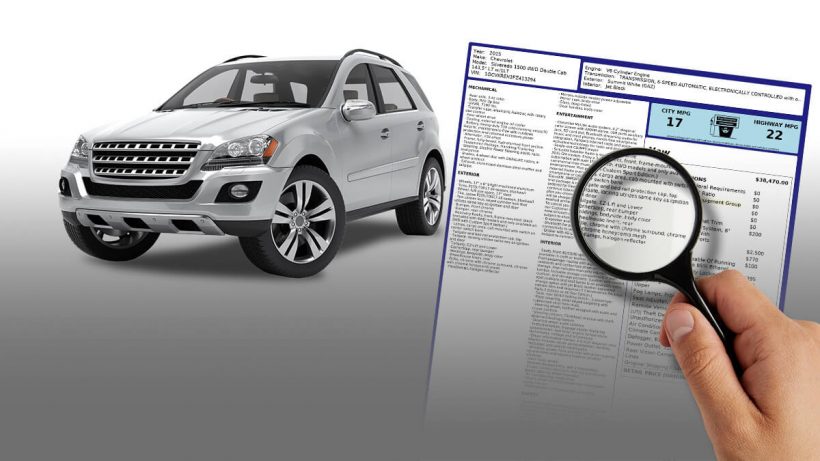
A window sticker — formally called a Monroney label — is a federally mandated document that must accompany every new vehicle sold in the United States. It was named after Senator Mike Monroney of Oklahoma, whose 1958 Automobile Information Disclosure Act required automakers to display price and specification information on all new vehicles.
The law exists for one reason: to give buyers accurate, standardized information that can’t be manipulated by dealers or sellers.
Every Monroney label is produced by the manufacturer — not the dealership. It reflects exactly what the factory built, how it was equipped, and what each element cost. No dealer markups, no verbal descriptions, no interpretation. Just the original factory record.

Why this matters for used car buyers:
The original window sticker travels with the VIN, not the car. Even if the physical sticker was removed years ago, the underlying factory data remains retrievable which means you can pull the original Monroney label for any VIN-eligible vehicle, regardless of how old it is or how many times it’s changed hands.
10 Key Sections on Every Window Sticker
Understanding what each section contains helps you extract maximum value from the document whether you’re verifying a seller’s claims, researching a purchase, or matching parts for a restoration.
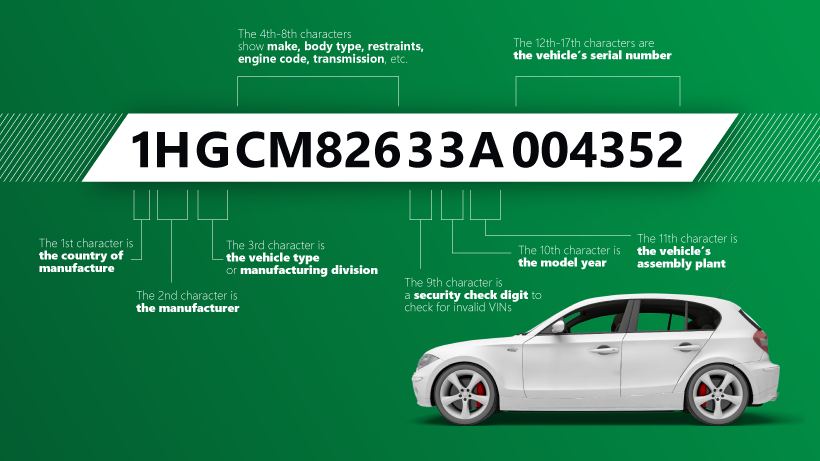
1. VIN and Vehicle Characteristics
The top section of every Monroney label identifies the specific vehicle:
- VIN (all 17 characters)
- Exterior color with factory paint code
- Interior color and material with trim code
- Trim level (Base, Sport, Limited, Platinum, etc.)
- Engine code and displacement
- Transmission type
- Drivetrain (FWD, RWD, AWD, 4WD)
Why it matters: The VIN characteristics section is your primary verification tool. Every spec listed here should match the physical vehicle. A discrepancy between the window sticker and what you see in person — a different engine, a different drivetrain, different interior — is a red flag that requires explanation.
Real example: A 2022 Jeep Grand Cherokee listed as AWD. Window sticker: RWD with factory AWD delete option applied by the original buyer to reduce cost. The seller had assumed AWD based on the model name alone. Jeep Window Sticker.
2. Standard Equipment
This section lists every feature included in the vehicle’s base configuration — equipment that comes standard on every unit of that trim level, regardless of what options were ordered.
Standard equipment varies significantly by trim. A base Toyota Camry LE and a Camry XSE share the same nameplate but have fundamentally different standard equipment lists. The Toyota window sticker tells you exactly what came standard on this specific unit.
Why it matters: Sellers frequently describe features as “standard” when they were actually optioned. The window sticker separates confirmed standard equipment from wishful thinking.
3. Optional Equipment and Packages
This is often the most valuable section for used car buyers — and the most frequently misrepresented by sellers. Optional equipment lists every upgrade ordered at the factory: technology packages, premium audio systems, towing packages, advanced safety systems, sunroofs, heated and ventilated seats, and performance upgrades. Each line item is listed with its individual MSRP price.
Real example: A 2020 Honda Pilot listed as having the “Elite package.” Honda Window sticker showed only the Touring trim with a rear entertainment system add-on — not the Elite. The buyer confirmed the difference and adjusted their offer by $3,100.
Why it matters for pricing: Options add measurable resale value. A used vehicle with documented factory options — a $2,500 technology package, a $1,200 premium audio system — commands a legitimate premium. The window sticker is the only documentation that proves those options were factory-installed rather than dealer-added or seller-claimed.
4. Component and Destination Pricing
Every Monroney label includes a complete price breakdown:
- Base MSRP for the trim level
- Individual option pricing for each package and add-on
- Regional advertising fee (varies by manufacturer and market)
- Destination and delivery charge (mandatory federal disclosure)
- Total MSRP combining all of the above
Why it matters: The component pricing section establishes the vehicle’s original value — useful for insurance claims, estate valuations, and used car price negotiations. When a seller claims a vehicle was “$58,000 new,” the window sticker either confirms or contradicts that figure to the dollar.
5. Fuel Economy and EPA Data
Every Monroney label displays the EPA’s official fuel economy ratings:
- City, highway, and combined MPG (or MPGe for electrics)
- Annual fuel cost estimate (based on average miles and fuel prices)
- QR code linking to the EPA’s fueleconomy.gov page for the specific model
- Comparison to similar vehicles in the same class
Updated for 2026: Electric and hybrid vehicles now include additional data points: estimated range, charging time at Level 1/Level 2/DC fast charge, and energy efficiency ratings in MPGe. For EVs, the window sticker fuel economy section has become significantly more complex — and more important.
Why it matters: EPA ratings on the window sticker reflect the factory configuration. If the vehicle has been modified (aftermarket exhaust, re-gearing, tire size change), actual real-world economy may differ. The sticker gives you the baseline.
6. Warranty Coverage
This section documents the manufacturer’s warranty as it applied when the vehicle was sold new:
- Bumper-to-bumper (typically 3 years/36,000 miles)
- Powertrain (typically 5 years/60,000 miles, or 10yr/100K for Hyundai/Kia)
- Corrosion/rust-through warranty
- Roadside assistance coverage period
- Emissions warranty (federal requirements)
Why it matters for used buyers: Knowing the original warranty terms helps you calculate remaining coverage based on the vehicle’s age and mileage. A 2023 vehicle with 28,000 miles still has significant bumper-to-bumper coverage remaining — and that’s worth money.
If a vehicle is involved in an accident and has a salvage title, the manufacturer’s warranty may be voided. Check vehicle history for more precise results.
7. Safety Ratings
The window sticker includes official crash test results from:
- NHTSA (5-star rating system: frontal, side, rollover)
- IIHS (Good/Acceptable/Marginal/Poor ratings for multiple crash scenarios)
- Airbag system description and deployment logic
Important caveat: Safety ratings on the window sticker reflect the ratings as of the vehicle’s production year. NHTSA and IIHS occasionally update their testing protocols, and some models have received updated ratings after the sticker was printed. Always cross-reference with the current NHTSA and IIHS databases for the most current ratings.
You can check vehicle safety recalls for free with ClearVin.
8. Emissions Certification
This section documents compliance with federal and state emissions standards:
- Federal Tier 3 emissions certification
- California SULEV/ULEV/PZEV certification (where applicable)
- CARB compliance status for California and CARB-state registration
Why it matters: If you’re purchasing a vehicle across state lines and intend to register it in California or another CARB state, the emissions certification on the window sticker confirms whether the vehicle can be legally registered in your state. Historical emission test results are available wit emission check by VIN.
9. Vehicle Dimensions and Capacities
This section includes factory-confirmed specifications:
- Curb weight and GVWR (Gross Vehicle Weight Rating)
- Cargo volume (cubic feet)
- Seating capacity
- Towing capacity and maximum payload
- Ground clearance and wheelbase
Why it matters for trucks and SUVs: Towing and payload ratings are option-dependent. A Ram 1500 configured for maximum towing has a different rating than the same truck without the Max Tow Package. The window sticker shows the rating for this specific truck’s configuration — not the model’s theoretical maximum.
10. Model-Specific Callouts
Many window stickers include a highlighted section featuring the model’s notable attributes, special packages, limited edition designations, or performance credentials. This section varies by manufacturer and is often the most visually prominent part of the sticker.
Examples: “Built for the Nürburgring” on a performance variant, “Limited Edition: Build #247 of 500” on a special production run, or package callouts like “F-150 Tremor Off-Road Package” with a visual feature breakdown.
Why Window Stickers Matter for Used Car Buyers
The Monroney label is the only document that gives you a factory-certified, manufacturer-produced record of exactly what was built into a specific vehicle. For used car buyers, it serves four distinct purposes:
Verification against seller claims The window sticker either confirms or contradicts everything the seller tells you about options, trim level, and original price. It’s the manufacturer’s statement, not the seller’s.
Accurate used vehicle valuation Tools like Kelley Blue Book and Edmunds factor in factory options when calculating used values. Without documented factory options, you’re negotiating blind. With the window sticker, you have manufacturer-level documentation of every option that should be influencing the price.
Restoration and OEM parts matching For classic cars, collector vehicles, and restoration projects, the window sticker provides the factory paint codes, interior color codes, and option codes needed to source correct OEM replacement parts and maintain authenticity.
Insurance and financing documentation Insurance companies and lenders sometimes request factory specifications for high-value vehicles. A window sticker provides this documentation in a standardized, manufacturer-produced format that both parties accept.
How to Get a Window Sticker by VIN
The physical sticker that came with the vehicle when it was sold new is rarely available on used cars — it gets removed, damaged, or lost over years of ownership. But the underlying factory data is retrievable from the VIN.
Option# 1: ClearVin Window Sticker Lookup
ClearVin provides window sticker retrieval by VIN for a wide range of makes and models — one of the fastest and most comprehensive services available.
How it works:
- Locate the 17-character VIN on the dashboard (visible through the windshield), door jamb sticker, or title documents
- Go to ClearVin.com/window-sticker
- Select the vehicle’s make
- Enter the VIN
- Download the printable Monroney label instantly
Coverage: 46 makes including Ford, Chevrolet, GMC, RAM, Toyota, Honda, Nissan, Hyundai, Kia, Jeep, Dodge, Chrysler, Subaru, Volkswagen, BMW, Mercedes-Benz, Audi, Volvo, and more.
Cost: From $8.99 — significantly less than the time spent contacting dealerships and waiting for responses.
Option# 2: Manufacturer Owner Portals
Some automakers provide window sticker lookup through their official owner portals. Availability and data completeness vary significantly by brand:
Ford: fordvehicles.com — Window sticker available for most models from 2001 onward Chevrolet/GMC: myvehicle.gm.com — Sticker lookup available for select models Toyota: toyota.com/configurator — Limited sticker retrieval Honda: owners.honda.com — Available for recent model years
Limitations: Manufacturer portals don’t always return complete data for older vehicles, rarely provide downloadable PDFs, and can be slow to respond — especially for high-demand requests. For vehicles not available through manufacturer portals, ClearVin’s service fills the gap.
Option# 3: Contact the Selling Dealership
For vehicles purchased new from a franchised dealership, the original selling dealer sometimes retains records including the Monroney label. Call with the VIN and ask whether they can retrieve the original sticker from their records.
When this works: Late-model vehicles sold by large franchise dealers with good record-keeping practices.
When it doesn’t work: Private sales, older vehicles, vehicles sold by out-of-business dealerships, or vehicles that changed dealers between new and current owner.
Window Sticker vs. Vehicle History Report: What’s the Difference?
Buyers sometimes confuse window stickers with vehicle history reports. They’re complementary tools — not substitutes for each other.
| Comparison Chart | Window Sticker | Vehicle History Report |
|---|---|---|
| Source | Manufacturer | DMV, insurance, auctions |
| What it covers | Original factory configuration | Everything that happened after |
| Accident history | No | Yes |
| Ownership records | No | Yes |
| Factory options | Yes — complete | No |
| Original pricing | Yes | No |
| Title brands | No | Yes |
| Best used for | Verifying what a vehicle was built as | Verifying what happened to it since |
The smartest approach: Run both. A window sticker tells you the vehicle’s factory story. A ClearVin history report tells you everything that happened after it left the factory.
Common Questions About Window Stickers
Can I get a window sticker for a used car?
Yes. The factory data is tied to the VIN, not the physical sticker. As long as the VIN is available and the make is supported, ClearVin can retrieve the original Monroney data regardless of the vehicle’s age or current owner.
Are window stickers available for all makes and models?
Coverage varies by manufacturer and model year. ClearVin currently supports 46 makes. Some older vehicles and certain import brands have limited data availability. If your make isn’t listed, contact ClearVin support and we’ll advise on alternative options.
How accurate is the window sticker data?
Window sticker data is manufacturer-produced — as close to authoritative as it gets for factory configuration. The only limitation: dealer-installed options (accessories added at the dealership after the vehicle arrived from the factory) won’t appear on the Monroney label because they weren’t part of the factory build.
What if the window sticker doesn’t match the vehicle?
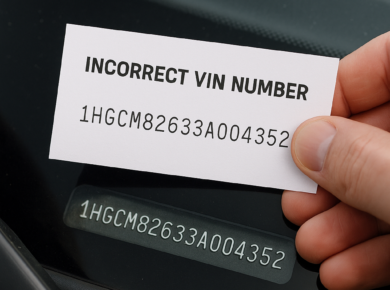
Discrepancies between the window sticker and the physical vehicle need investigation. Common causes include incorrect VIN provided by the seller, aftermarket modifications replacing factory equipment, and — in fraud cases — a mismatched VIN plate on a vehicle that wasn’t originally built to those specs.
Any significant discrepancy is grounds for pausing the purchase and running a full ClearVin vehicle history report to investigate further.
Can dealers charge for the window sticker?
On new vehicle purchases, dealers are legally required to display the Monroney label and cannot charge separately for it. For used vehicles where you’re retrieving historical window sticker data via a VIN lookup service, a modest fee (typically under $10) is standard.
Get Your Window Sticker by VIN with ClearVin
Whether you’re buying a used vehicle, restoring a classic, verifying a seller’s claims, or simply curious about a car’s original factory configuration — ClearVin makes it fast and straightforward.
👉 Retrieve your window sticker now: ClearVin.com/window-sticker
46 makes supported | Instant downloadable PDF | Factory-accurate specs and pricing | From $8.99 per sticker | 100% money-back guarantee