Walk into any car dealership, and you’ll encounter a bewildering array of numbers: invoice prices, dealer quotes, manufacturer rebates, financing rates, and most prominently the MSRP displayed on every vehicle’s window sticker. For many car buyers, MSRP represents a mystery wrapped in automotive jargon. Understanding what MSRP actually means transforms you from a confused shopper into an informed negotiator capable of recognizing fair deals and avoiding costly mistakes.
This comprehensive guide to MSRP explaining what it stands for, how manufacturers calculate it, why it matters for your purchase decision, and most importantly, how to use this knowledge to your advantage when buying a new or used vehicle.
Smart Tip: Before negotiating on any vehicle, run a ClearVin window sticker lookup using the VIN. You’ll discover the original MSRP, factory-installed options, and equipment details that help you negotiate from a position of knowledge rather than guesswork.
What Does MSRP Stand For in Cars?
The acronym MSRP stands for Manufacturer’s Suggested Retail Price. As the name indicates, this represents the price that automotive manufacturers recommend their authorized dealerships charge for a specific vehicle model, trim level, and option configuration.
Despite containing the word “suggested,” MSRP carries significant weight in the automotive marketplace. It serves as the official pricing benchmark that influences dealer negotiations, manufacturer incentives, financing calculations, lease payments, insurance valuations, and eventual resale values.
Key Understanding: MSRP is not a mandatory price ceiling or floor. Dealerships maintain complete legal freedom to sell vehicles above MSRP (called “market adjustment” or “dealer markup”) or below MSRP (through discounts and negotiations). The actual transaction price you pay often differs substantially from the advertised MSRP.
Why MSRP Matters for Car Buyers
Understanding MSRP provides several critical advantages in the vehicle purchasing process:
Establishes a Baseline for Negotiations:
MSRP gives you a starting reference point when evaluating dealer quotes. If a dealer offers “$2,000 off MSRP,” you can immediately calculate whether that represents a competitive discount or merely brings the price to market average.
Enables Accurate Vehicle Comparisons:
When comparing similar vehicles from different manufacturers, MSRP allows apples-to-apples pricing analysis. A Honda CR-V with a $32,000 MSRP can be directly compared to a Toyota RAV4 with a $33,500 MSRP, revealing which offers better base value before considering options and features.
Reveals Option Package Value:
MSRP breakdowns show exactly how much each option package, technology bundle, or premium feature adds to the base price. This transparency helps you decide whether the $3,500 “Technology Package” genuinely delivers value or simply inflates dealer profit margins.
Affects Financing and Leasing:
Many financing offers advertise rates based on MSRP (“2.9% APR on vehicles with MSRP under $40,000”). Lease payments directly tie to MSRP through residual value calculations. Understanding MSRP helps you evaluate whether financing and lease terms make mathematical sense.
Influences Insurance Premiums:
Insurance companies often use MSRP as one factor when calculating coverage costs and determining replacement values. Higher MSRP vehicles typically command higher insurance premiums, affecting your total cost of ownership.
Establishes Resale Value Benchmarks:
When selling or trading your vehicle years later, original MSRP serves as a reference point for depreciation calculations. Buyers frequently ask “What was the original MSRP?” to evaluate how much value the vehicle has retained.

How Manufacturers Calculate MSRP
MSRP isn’t randomly assigned. Automotive manufacturers employ sophisticated financial models that balance production costs, market positioning, competitive pressures, and profit targets. Here’s what goes into the calculation:
Production and Manufacturing Costs
The foundation of any MSRP starts with direct manufacturing expenses:
- Raw materials and components (steel, aluminum, plastics, glass, rubber)
- Labor costs for assembly line workers and quality control personnel
- Factory equipment, tooling, and facility overhead
- Research and development amortized across expected production volume
- Safety and emissions compliance testing and certification
A mid-size sedan like a Honda Accord might cost $22,000 to manufacture, including all direct and indirect production expenses. The MSRP must cover these costs while generating profit margins.
Marketing and Brand Development
Substantial marketing investments get factored into MSRP calculations:
- National advertising campaigns across television, digital, and print media
- Sponsorships and brand partnerships (NASCAR, NFL, Olympics)
- Regional dealer cooperative advertising funds
- Auto show displays and promotional events
- Digital marketing and social media presence
Major automotive brands spend billions annually on marketing. These costs get distributed across MSRP pricing for all models in their lineup.
Transportation and Distribution Logistics
Moving vehicles from factories to dealerships involves significant expenses:
- Shipping from overseas manufacturing facilities (many vehicles are imported)
- Rail and truck transport to regional distribution centers
- Final delivery to individual dealerships
- Port fees, customs duties, and import regulations compliance
Destination charges, typically $1,000 to $2,000, appear separately on window stickers but factor into the total MSRP pricing structure. Vehicles manufactured overseas naturally carry higher distribution costs than domestically-produced models.
Competitive Market Analysis
Manufacturers carefully study competitor pricing before finalizing MSRP. If Toyota prices the Camry at $26,000 MSRP, Honda must consider this when setting Accord pricing. Pricing too high risks losing sales to the competition. Pricing too low might suggest inferior quality or leave profit on the table.
Manufacturers segment their lineups strategically: economy models carry lower MSRPs to capture budget-conscious buyers, while luxury trims command premium pricing that signals exclusivity and superior features.
Target Market Demographics
MSRP reflects the intended buyer’s purchasing power and expectations:
Economy vehicles targeting first-time buyers or budget-conscious families maintain accessible MSRPs, typically $20,000 to $28,000. Mid-market vehicles aimed at established professionals carry MSRPs from $30,000 to $50,000. Luxury vehicles targeting affluent buyers command MSRPs exceeding $50,000, where higher prices actually enhance brand prestige.
Regional variations also influence MSRP. Vehicles sold in affluent coastal markets might carry higher MSRPs than identical models marketed in rural or economically-challenged regions.
Optional Features and Equipment Packages
Base MSRP represents the vehicle with standard equipment only. Every optional feature adds incremental cost:
- Premium paint colors: $300-$600
- Sunroof/moonroof: $1,000-$2,000
- Leather upholstery: $1,500-$3,000
- Advanced driver assistance packages: $2,000-$4,000
- Premium audio systems: $800-$2,500
- Navigation and larger touchscreens: $1,000-$2,000
Manufacturers bundle popular options into packages (Sport Package, Technology Package, Premium Package) that carry lower incremental costs than selecting features individually—but still significantly increase total MSRP.
MSRP vs. Invoice, Market Value, and Transaction Prices
Car buying involves multiple price points that often confuse shoppers. Understanding how these relate to MSRP clarifies the negotiation landscape:
MSRP vs. Invoice Price
Invoice Price represents what the dealership theoretically pays the manufacturer for the vehicle. This differs from MSRP in important ways:
Invoice price typically runs 5-15% below MSRP, depending on the model and market segment. For a vehicle with $35,000 MSRP, invoice might be $31,500—a $3,500 difference that represents the dealer’s gross profit margin before accounting for overhead and sales costs.
However, invoice price proves less meaningful than it appears. Dealers receive additional compensation through manufacturer incentives, holdback (a percentage refunded after sale), regional advertising credits, and volume bonuses. A dealer selling below invoice might still profit through these hidden revenue streams.
Smart negotiators focus on achieving fair market value rather than targeting specific percentages above or below invoice.
MSRP vs. Market Value
Market Value represents what buyers actually pay in current market conditions, which fluctuates based on supply and demand dynamics:
During periods of high demand and limited supply (like the 2021-2023 vehicle shortage), many popular models sold above MSRP. Buyers paid $5,000 to $15,000 over MSRP for in-demand trucks, SUVs, and hybrid vehicles because alternatives simply weren’t available.
Conversely, during periods of oversupply or slow sales, dealers discount heavily below MSRP. End-of-model-year clearances, manufacturer incentive programs, and competitive pressure can bring transaction prices 10-20% below MSRP.
Market value also varies geographically. A Ford F-150 might sell near MSRP in truck-friendly Texas while requiring significant discounts in urban California where smaller vehicles dominate.
MSRP vs. Transaction Price
Transaction Price represents the actual amount you pay after negotiations, including all fees and charges:
Transaction price = Negotiated vehicle price + Destination charge + Documentation fees + State/local taxes + Title and registration fees + Optional dealer-added products (paint protection, wheel locks, etc.)
While you might negotiate the vehicle to $2,000 below MSRP, various fees and taxes could add $3,000 to $5,000 to your transaction price. Always evaluate total out-the-door cost rather than focusing solely on the vehicle’s negotiated price.
Why MSRP Varies by Region, Year, and Configuration
Two identical vehicles same make, model, trim, and color can carry different MSRPs based on several factors:
Regional MSRP Adjustments
Manufacturers adjust MSRP based on regional market conditions:
- High-cost-of-living areas (California, Northeast corridor) often see higher MSRPs reflecting elevated operating costs and affluent demographics. Rural and economically-challenged regions might receive lower MSRPs to maintain affordability and competitiveness.
- Different regions demand different features, affecting MSRP. Southwestern markets favor air conditioning as standard equipment. Northern states prioritize cold-weather packages. Coastal areas add corrosion protection. These regional preferences influence local MSRP structures.
Model Year Changes
MSRP typically increases with each new model year due to:
- Inflation and rising production costs
- New standard safety features mandated by regulations
- Technology upgrades and feature improvements
- Emissions compliance requiring expensive engineering changes
A 2024 Honda CR-V might carry a $32,000 base MSRP while the mechanically-identical 2025 model starts at $33,200, a $1,200 increase justified by minor feature updates and general inflation. This creates opportunity. End-of-year clearances on outgoing model years offer the same vehicle with lower MSRP and additional dealer discounting, potentially saving $3,000 to $5,000 compared to the new model year.
Option Configurations
Even within the same trim level, MSRP varies dramatically based on selected options: Consider a Toyota Camry XLE. Base MSRP might be $32,000. Add the Technology Package ($2,500), premium audio ($1,200), panoramic sunroof ($1,400), and red exterior paint ($425), and MSRP climbs to $37,525—a $5,525 increase for optional equipment. Understanding option pricing helps you maximize value. Sometimes higher trim levels include desirable features at lower incremental cost than adding those same features as options to lower trims.
How to Find MSRP for Any Vehicle
Whether researching a vehicle you’re considering purchasing or verifying the original MSRP of a vehicle you already own, several reliable methods provide accurate information:
Manufacturer Websites
Automaker websites offer the most current MSRP information for new vehicles. Navigate to the manufacturer’s site (toyota.com, ford.com, etc.), select your model of interest, choose trim level and options, and the build-and-price tool displays MSRP in real-time.
This method works perfectly for new vehicles but doesn’t help with used vehicles or older model years no longer in production.
Dealership Listings
Dealer inventory websites display MSRP for every vehicle in stock. This includes both new vehicles and certified pre-owned models where original MSRP provides context for current pricing. Exercise caution: some dealers list “adjusted market price” or “market value” instead of true MSRP, particularly during high-demand periods. Look specifically for “MSRP” or “Manufacturer’s Suggested Retail Price” to ensure accuracy.
Third-Party Automotive Resources
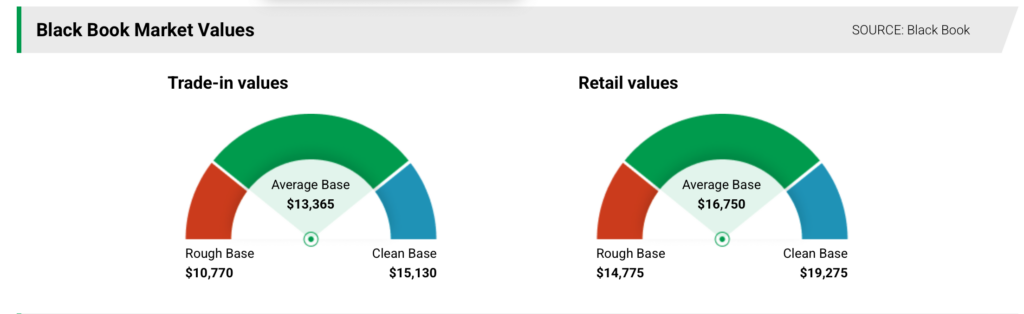
Websites like Edmunds or Kelley Blue Book (KBB) maintain comprehensive MSRP databases covering current and historical model years. These resources often provide additional context like fair purchase price ranges, dealer incentives, and market conditions affecting actual transaction prices. ClearVin source vehicle market valuation data for VIN report from BlackBook.
Original Window Sticker Lookup (Most Reliable)
The Most Accurate Method: Window sticker lookup using the Vehicle Identification Number (VIN) provides the definitive MSRP for any specific vehicle, including all factory-installed options and equipment.
Every vehicle manufactured for sale in the United States receives a Monroney label (commonly called the window sticker) that displays:
- Base MSRP for the specific trim level
- Itemized pricing for every factory-installed option and package
- Destination and delivery charges
- Total MSRP including all options and charges
- Fuel economy ratings and safety information
- Manufacturing details and country of origin
ClearVin Window Sticker Lookup: With just the VIN, ClearVin retrieves the original factory window sticker, providing verified MSRP data directly from manufacturer sources. This proves invaluable when buying used vehicles where the physical window sticker no longer exists but you need to understand original equipment and pricing.
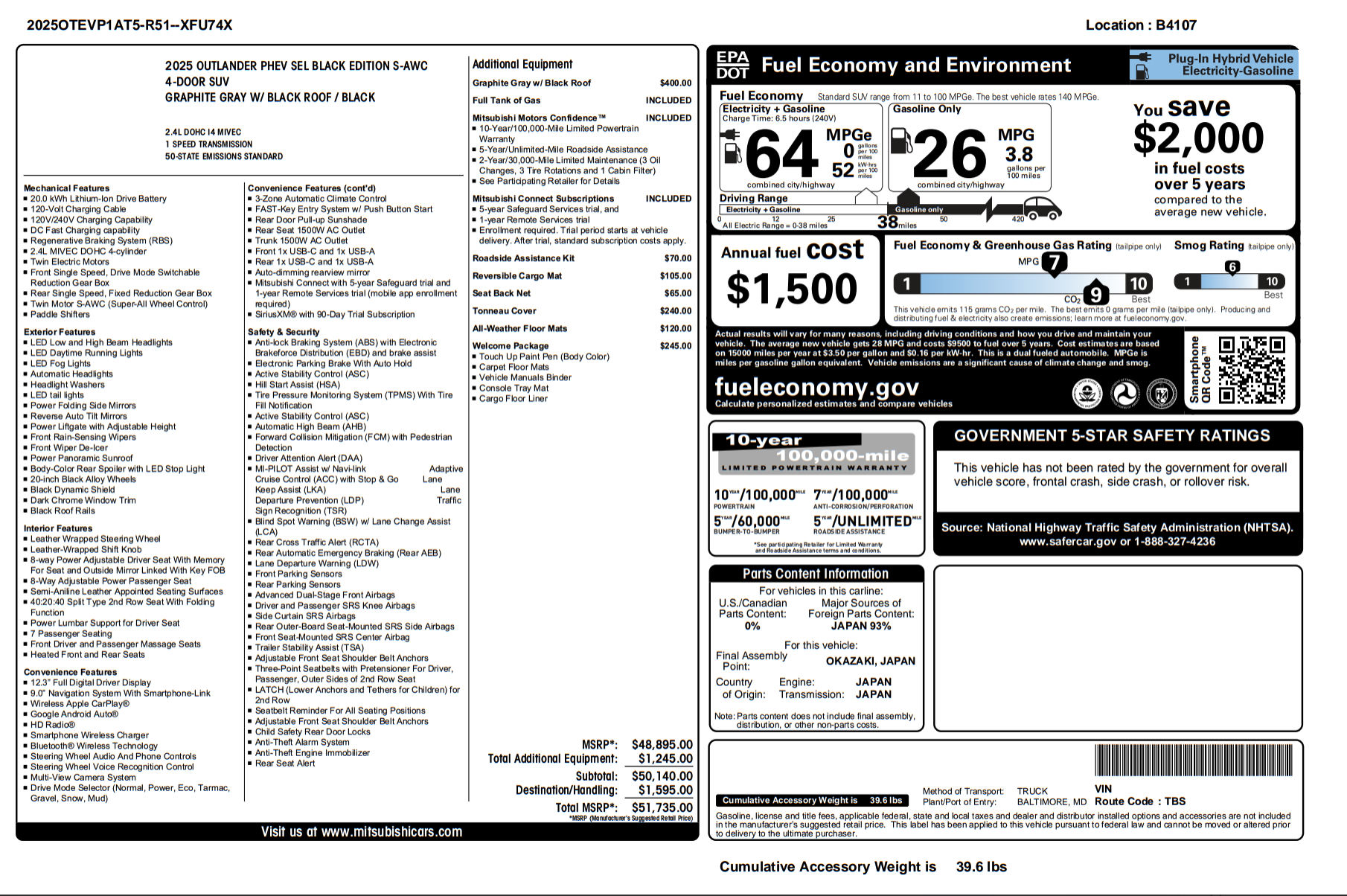
Window sticker lookups also reveal whether dealer-installed accessories (spoilers, running boards, upgraded wheels) were factory equipment included in MSRP or aftermarket additions that shouldn’t command premium pricing.
Using MSRP to Make Smarter Buying Decisions
Understanding MSRP transforms from academic knowledge into practical negotiating power through strategic application:
Benchmark Dealer Quotes Against MSRP
When a dealer quotes “$38,500 for this vehicle,” your first question should be “What’s the MSRP?” If MSRP is $41,000, you’re receiving a $2,500 discount—potentially a fair deal depending on market conditions. If MSRP is $39,000, the dealer is only discounting $500 while implying generous savings. Always anchor negotiations to MSRP, not dealer asking prices that might already include artificial markup.
Identify Overpricing and Dealer Markups
During the 2021-2023 vehicle shortage, unscrupulous dealers added “market adjustments” of $5,000 to $20,000 above MSRP. Knowing MSRP protected informed buyers from predatory pricing.
Even in normal markets, some dealers add “mandatory” packages or accessories at inflated prices. Understanding MSRP helps you distinguish between fair pricing and dealer-imposed markups that exist solely to inflate profits.
Calculate True Option Package Value
Dealers love selling option packages because they generate higher profit margins than base vehicles. MSRP breakdowns reveal whether packages deliver value or simply pad dealer profits.
Example: A dealer offers a “Premium Package” for $4,500 that includes leather seats, upgraded audio, and navigation. MSRP breakdown shows the manufacturer charges $2,800 for this package. The dealer added $1,700 markup on the options alone. This knowledge changes negotiations dramatically.
Evaluate Lease and Finance Offers
Lease payments derive from MSRP through residual value calculations (the predicted value at lease end, expressed as a percentage of MSRP). Understanding MSRP helps you verify that lease calculations make mathematical sense. Financing offers often specify terms like “2.9% APR on models with MSRP under $35,000.” Knowing your vehicle’s exact MSRP ensures you receive advertised rates rather than higher financing costs.
Determine Fair Trade-In Values
When trading your current vehicle, dealers will ask about original MSRP to establish depreciation calculations. Running a window sticker lookup provides documented MSRP that supports your trade-in negotiation. ClearVin provides actual loan, trade-in, wholesales vehicle values for business in bulk through Dealer Program or via Vehicle Valuation API. Also, standard MSRP is available with a free VIN Decoder.
Original MSRP also helps you evaluate dealer trade-in offers. A vehicle with $42,000 MSRP three years ago might reasonably trade for $28,000 today (33% depreciation). An offer of $22,000 suggests the dealer is low-balling, creating room for negotiation.
What MSRP Doesn’t Tell You (And Why That Matters)
While MSRP provides valuable information, it has important limitations that smart buyers recognize:
MSRP Doesn’t Reflect Actual Market Conditions
MSRP remains static while market conditions fluctuate constantly. During shortages, vehicles sell above MSRP. During oversupply, dealers discount heavily. MSRP provides the reference point, but market research reveals what buyers actually pay.
MSRP Ignores Available Incentives
Manufacturers frequently offer incentives rebates, special financing, loyalty bonuses, lease cash that dramatically reduce effective prices below MSRP. A vehicle with $35,000 MSRP might have $4,000 in combined incentives, bringing the realistic target price to $31,000.
MSRP doesn’t account for these programs. Research current manufacturer incentives before negotiating to understand realistic pricing expectations.
MSRP Doesn’t Include All Ownership Costs
Two vehicles with identical MSRP can have vastly different total ownership costs:
- Insurance premiums vary by model
- Fuel costs differ dramatically (hybrid vs. V8 engine)
- Maintenance expenses vary by manufacturer and complexity
- Depreciation rates differ by brand and model
- Registration fees vary by state and vehicle value
A $35,000 Honda Accord and $35,000 BMW 3-Series share the same MSRP but deliver dramatically different ownership experiences and total costs over five years.
MSRP Doesn’t Guarantee Vehicle Quality or Reliability
Higher MSRP suggests premium features but doesn’t necessarily indicate superior reliability, lower maintenance costs, or better long-term value. Research reliability ratings, ownership reviews, and total cost of ownership separately from MSRP.