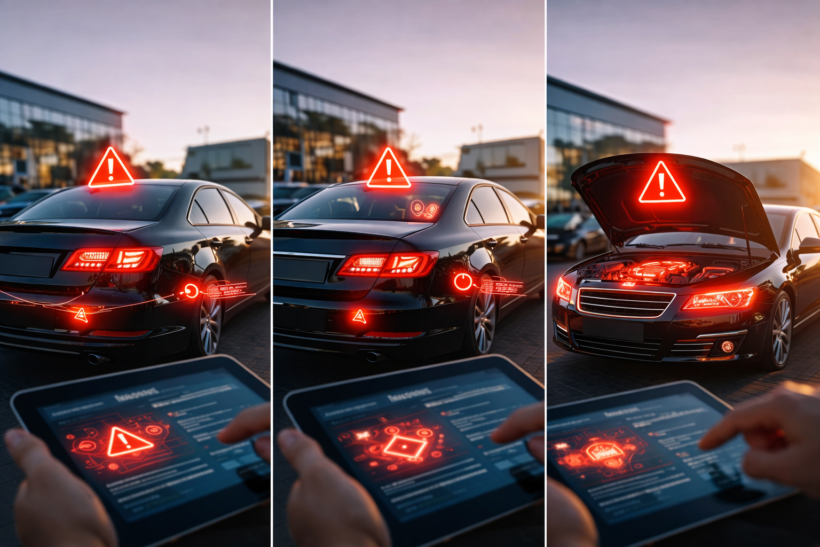
Buying a used car is exciting until you discover it has an open recall. Before you panic, let’s walk through what this means and exactly what you need to do to protect yourself and your family.
What Is an Open Recall?
A vehicle recall happens when a manufacturer or the National Highway Traffic Safety Administration (NHTSA) identifies a safety-related defect in a car. This could be anything from faulty airbags to problematic brakes. Sometimes recalls are issued because a vehicle doesn’t meet federal safety standards.
An open recall simply means the safety issue has been identified, but the necessary fix hasn’t been completed yet.Think of it as an unfinished repair waiting to happen.
These defects typically affect groups of vehicles with the same design or manufacturing issue, and they pose real risks to driver and passenger safety. That’s why taking action matters.
What Happens When a Recall Is Issued?
By law, manufacturers have three options to correct a recall:
- Repair the defect
- Replace the defective part or vehicle
- Refund your money (in rare cases)
For equipment like tires, child car seats, and booster seats, manufacturers must repair or replace the affected items at no cost to you.
Makes with the highest number of recalls in the US (2025-2026):
- Ford Recalls Check – ~20 million vehicles (dominates the list)
- Toyota Recalls Check – 4+ million vehicles
- Nissan Recalls Check – 669,000+ vehicles (huge increase)
- Hyundai Recalls Check – 500,000+ vehicles
- Chrysler Recalls Check – 400,000+ vehicles
- Subaru Recalls Check – 200,000+ vehicles
- Honda Recalls Check – 150,000+ vehicles
- Volkswagen Recalls Check – 100,000+ vehicles
- Kia Recalls Check – 75,000+ vehicles
Here’s the important part: All recall repairs are free when your vehicle qualifies. You shouldn’t pay a dime for parts or labor related to a safety recall.
Steps to Take If Your Car Has an Open Recall
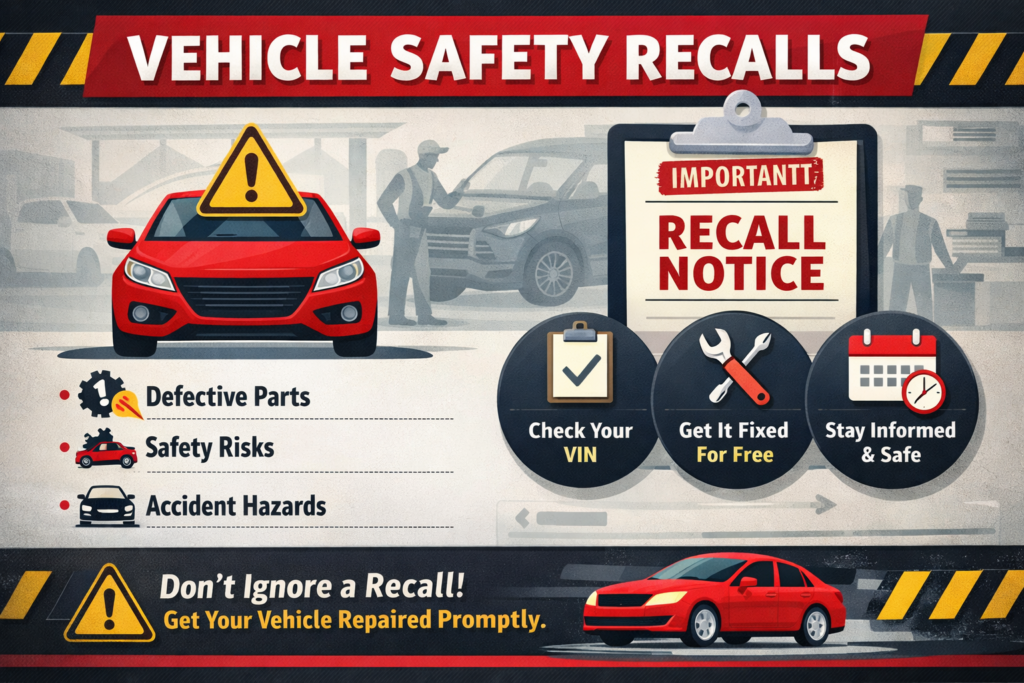
1. Verify the Recall
Run a free recall check using your Vehicle Identification Number (VIN). ClearVin offers a free VIN recall check that shows you exactly which recalls apply to your vehicle. You can also check directly through NHTSA’s website.
2. Contact the Manufacturer or Dealer
Once you confirm an open recall exists, reach out to either:
- The vehicle manufacturer’s customer service
- Your local authorized dealership
Schedule an appointment to get the repair done. Most dealerships handle recall repairs even if you didn’t buy the car from them.
3. Understand the Timeline
There’s often a gap between when a recall is announced and when the fix becomes available. Why? The manufacturer needs time to:
- Identify all affected vehicle owners
- Develop the repair procedure
- Train dealership technicians
- Manufacture and distribute replacement parts
- Send official notifications to owners
If parts aren’t available yet, the NHTSA requires manufacturers to send an interim notice letting you know the recall exists and that a remedy is coming. The dealership can’t fix your car until they receive the parts and instructions, so you may need to wait.
Important Limitations You Should Know
Age Restrictions
Free recall repairs are guaranteed for vehicles less than 15 years old from their original sale date. The 15-year clock starts ticking from the day the car was first sold, not manufactured.
What if your car is older than 15 years? The manufacturer isn’t legally required to fix it for free. However, the safety problem still exists. If you receive a recall notice on an older vehicle, you should still get it repaired—you’ll just need to cover the cost yourself.
Disputed Recalls
Sometimes manufacturers challenge NHTSA’s recall decisions in court. While the case is pending, they’re not obligated to perform repairs.
If you decide to pay for the fix yourself during this time, keep your receipts. You can apply for reimbursement if the recall is officially confirmed later. Manufacturers must reimburse repairs made between:
- Start date: When NHTSA opens its Engineering Analysis (or one year before the manufacturer notifies NHTSA of the defect)
- End date: 10 days after the manufacturer sends final owner notifications
What If a Dealer Refuses Your Free Repair?
If your vehicle qualifies for a free recall remedy and a dealer won’t help, contact the manufacturer immediately.
Dealership agreements require authorized service centers to provide recall repairs at no charge regardless of where you originally purchased the vehicle. You have the right to visit any authorized dealer for your free repair.
Pro tip: Dealers might refuse service because they haven’t received the necessary parts or repair instructions yet, not because they don’t want to help. Ask about the timeline and check back later.
Should You Buy a Car with an Open Recall?
This is a common question, and the answer depends on several factors:
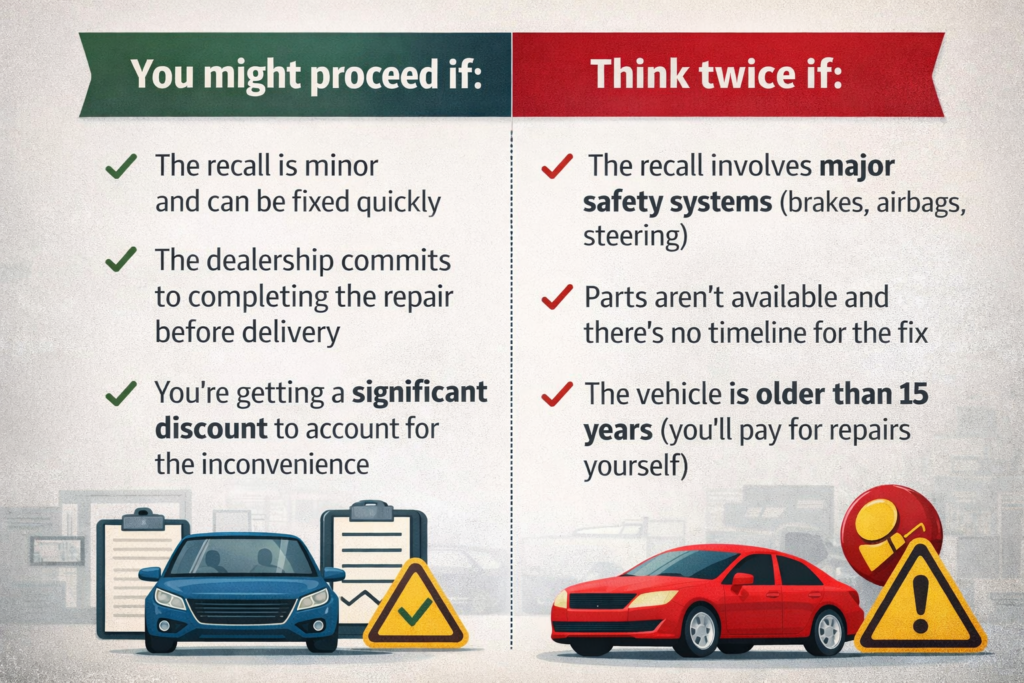
Always run a VIN recall check before buying any used car. A comprehensive vehicle history report from ClearVin not only shows recall information but also reveals title history, accident records, odometer readings, and more giving you the complete picture before you commit.
Key Statistics Featured:
- 67 million Takata airbags recalled
- 5+ million still unrepaired in 2026
- 48% average completion rate
- 28 deaths, 400+ injuries from Takata alone
- Ford leading with 4.9+ million recalls in 2026
How ClearVin Helps You Stay Safe
At ClearVin, we believe transparency is key to smart car buying. That’s why we offer:
- Free Recall Checker: Instantly verify if a vehicle has any open recalls
- Comprehensive VIN Reports: Access complete vehicle history including safety recalls
- Window Sticker Lookup: See original factory specifications and equipment
- NMVTIS-Approved Data: Reliable information from authoritative government sources
Simply enter your VIN to check for recalls in seconds. Get recall number, problem description and free remedy contact details.
The Bottom Line
Open recalls are serious safety issues that shouldn’t be ignored. Whether you currently own a vehicle with an open recall or you’re considering buying one, here’s what you need to remember:
- Recalls exist to protect you: they address real safety defects
- Repairs are free for vehicles under 15 years old
- Any authorized dealer can help, not just where you bought the car
- Check before you buy: run a VIN recall check on any used vehicle
- Don’t delay: unresolved recalls put you, your passengers, and other drivers at risk
Remember: an open recall doesn’t just affect you, it’s a hazard to everyone on the road. Take action to get it resolved and drive with confidence.




2 comments
Everything is very open with a precise description of the challenges.
It was definitely informative. Your site is extremely helpful.
Thank you for sharing!
Really informative blog
Comments are closed.