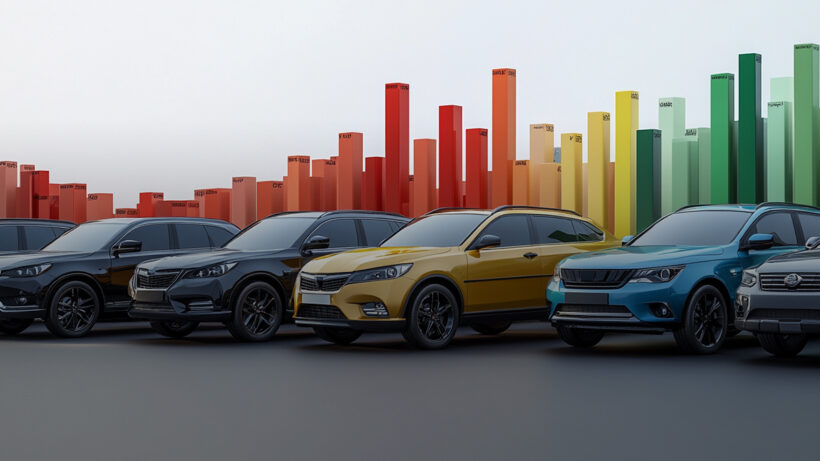
Understanding automotive market segments is essential for anyone involved in the vehicle industry. Whether you’re a car buyer evaluating options, a marketer targeting specific demographics, or an industry analyst tracking sales trends. The automotive market organizes vehicles into distinct categories based on measurable criteria including size, weight, engine type, cargo capacity, price point, and intended use. This systematic classification, known as car market segmentation or automobile segmentation, helps consumers make informed purchasing decisions and enables manufacturers to position their products effectively in the competitive marketplace.
This comprehensive guide by ClearVin explores the most common vehicle segments you’ll encounter in today’s automotive landscape, from microcars to luxury flagships.
Microcar: Ultra-Compact Urban Mobility
Microcars occupy a unique position in automotive segmentation, often falling into their own regulatory category that straddles the line between traditional automobiles and motorcycles. These diminutive vehicles are characterized by engines displacing less than 700 cubic centimeters and configurations featuring just three or four wheels.
Key Advantages:
- Exceptional fuel economy
- Superior maneuverability in tight urban spaces
- Easy parking in compact spaces
- Lower insurance and registration costs
Popular Models: Smart ForTwo, Tata Nano, Peel P50. You can check all vehicle specification by VIN with window sticker lookup.

A-Segment (City Car): The Minicompact Category
Also known as minicompact vehicles in EPA classification, A-segment cars represent the smallest category of four-door hatchbacks and sedans. This segment has a rich automotive heritage, with iconic models that have shaped urban transportation for decades.
From the original Fiat 500 to today’s modern interpretations like the Hyundai i10 and Toyota Aygo, A-segment vehicles successfully blend low running costs with urban agility. These cars typically seat four adults (though rear passengers may find space limited) and offer minimal but functional cargo capacity.
Ideal For: City dwellers, first-time car buyers, cost-conscious commuters, and those prioritizing parking convenience over passenger space. It’s easy to find a used car for any budget with Autobidmaster, official Copart broker.
B-Segment (Subcompact): Practical Everyday Transportation
Subcompact vehicles occupy the B-segment, offering a noticeable step up from city cars with interior and cargo volumes ranging from 85 to 99 cubic feet. This additional space makes a significant difference in daily usability without sacrificing the affordability and efficiency that buyers in this segment demand.
The B-segment has deep roots in American automotive history. Early U.S. examples included the AMC Gremlin and Ford Pinto, vehicles that responded to the 1970s oil crisis by offering domestic alternatives to imported economy cars. Today’s B-segment has evolved considerably, with modern favorites like the Volkswagen Polo, Renault Clio, Ford Fiesta, and Mazda2 delivering refinement levels that would have been unthinkable in earlier generations.
B-segment cars masterfully balance affordability with everyday practicality, offering sufficient space for small families while maintaining low purchase prices, excellent fuel economy, and manageable insurance costs.
C-Segment (Compact): The Global Sales Leader
Compact or C-segment vehicles represent the sweet spot of the automotive market, providing 100 to 109 cubic feet of combined passenger and cargo space. This segment encompasses most hatchbacks, sedans, and small wagons—the vehicles that form the backbone of global automotive sales.
Why C-Segment Dominates:
- Optimal balance of size, efficiency, and affordability
- Comfortable for four or five adults on extended journeys
- Adequate cargo capacity for weekly shopping or vacation luggage
- Wide variety of body styles (sedan, hatchback, wagon, coupe)
- Strong resale value and parts availability
Benchmark Models: Honda Civic, Toyota Corolla, Volkswagen Golf, Ford Focus, Mazda3, Renault Mégane.
The C-segment’s versatility explains its dominant market position. These vehicles serve equally well as family transportation, commuter cars, or sporty personal vehicles, making them the first choice for millions of buyers worldwide.
D-Segment (Mid-Size): Spacious Comfort and Refinement
Mid-size or intermediate models, classified as D-segment in global markets, deliver generous cabin dimensions and notably smooth rides. These vehicles target buyers who have outgrown compact cars but don’t require (or can’t afford) full-size luxury models.
The D-segment spans a broad spectrum, from economical family transports to near-luxury offerings. Models like the Honda Accord and Toyota Camry anchor the mainstream end of the segment, offering exceptional reliability and value retention. Meanwhile, vehicles like the Volkswagen Passat and Ford Mondeo provide European-influenced dynamics and upscale cabin appointments.
Despite facing pressure from crossover SUVs, D-segment cars still account for approximately 8 percent of U.S. vehicle sales, representing millions of annual transactions. Their appeal centers on superior ride comfort, spacious rear seats, and large trunk capacity advantages that remain compelling for traditional sedan buyers.
Notable D-Segment Vehicles: Ford Mondeo, Kia Optima, Mazda6, Subaru Legacy, Hyundai Sonata, Volkswagen Passat.
E-Segment (Executive/Full-Size): Premium Comfort and Technology
The E-segment bridges the gap between mainstream mid-size vehicles and true luxury flagships. In European markets, these are known as executive cars vehicles that project professional success and deliver superior comfort for business travel. In the United States, the equivalent full-size sedan category includes both premium and more accessible offerings.
E-segment vehicles divide into two distinct camps. Luxury-oriented models like the Jaguar XF, BMW 5 Series, and Mercedes-Benz E-Class emphasize premium materials, advanced technology, and brand prestige. Meanwhile, volume-oriented offerings such as the Chevrolet Impala and Toyota Avalon deliver similar space and comfort at more attainable price points, typically $10,000 to $20,000 less than their luxury competitors.
E-Segment Characteristics:
- Spacious rear legroom suitable for chauffeur-driven use
- Powerful engine options (often including V6 or turbocharged four-cylinders)
- Advanced safety and driver assistance technologies
- Premium audio systems and connectivity features
- Superior noise insulation and ride quality
F-Segment (Luxury Flagship): The Pinnacle of Automotive Excellence
F-segment vehicles represent the absolute pinnacle of automotive segmentation, where price becomes secondary to the pursuit of perfection. These full-size luxury models showcase each manufacturer’s most advanced technologies, finest materials, and most sophisticated engineering.
Vehicles in this rarified segment—including the BMW 7 Series, Mercedes-Benz S-Class, Audi A8, Lexus LS, and Rolls-Royce Ghost—serve as technology showcases for innovations that will eventually trickle down to mass-market vehicles. Features like adaptive air suspension, night vision systems, semi-autonomous driving capabilities, and massage seats often debut in F-segment flagships.
Beyond technology, F-segment vehicles deliver an uncompromising ownership experience. Hand-stitched leather interiors, real wood veneers, crystal control knobs, and bespoke customization options create environments of unparalleled luxury. The target buyer typically values prestige, comfort, and technological leadership above all other considerations. If you are looking for budget luxury car, read this article first.
Sports Cars: Performance-Focused Driving Machines
Sports cars exist outside the traditional size-based segmentation system, instead defining themselves through driving dynamics, performance capabilities, and emotional appeal. These vehicles prioritize acceleration, handling precision, and design flair over practical considerations like cargo space or rear-seat comfort.
The sports car segment itself subdivides into multiple categories. Affordable roadsters like the Mazda MX-5 and Toyota 86 offer pure driving enjoyment at accessible price points. Mid-tier performance cars such as the Chevrolet Corvette and Porsche Cayman deliver supercar-level capabilities for $60,000 to $100,000. At the top, exotic supercars from Ferrari, Lamborghini, and McLaren command six-figure prices and deliver hypercar performance.
Iconic Sports Cars: Mazda MX-5 Miata, Porsche 911, Chevrolet Corvette, BMW M3, Ford Mustang, Nissan GT-R
SUVs, Crossovers & Off-Road Vehicles: Versatile High-Riding Segments
The SUV, crossover, and off-road vehicle segments represent the most dynamic and fastest-growing categories in automotive segmentation. These overlapping segments have fundamentally reshaped the automotive marketplace over the past two decades, often at the expense of traditional sedans and wagons.
Segment Definitions:
- Off-Road Vehicles: Body-on-frame construction, genuine off-road capability, low-range gearing (Jeep Wrangler, Land Rover Defender)
- SUVs: Truck-based platforms with available four-wheel drive, substantial towing capacity (Chevrolet Tahoe, Toyota 4Runner)
- Crossovers: Car-based unibody construction, car-like handling, optional all-wheel drive (Honda CR-V, Toyota RAV4)
Terminology varies significantly by market. European markets often use specific size descriptors, while American classifications emphasize capability differences. Regardless of nomenclature, these vehicles share common appeals: higher seating positions for improved visibility, available all-weather traction systems, generous cargo capacity, and a commanding road presence.
SUV and crossover segments now span from subcompact models barely larger than hatchbacks (Mazda CX-3, Hyundai Kona) to three-row behemoths accommodating eight passengers (Chevrolet Suburban, Ford Expedition – Ford Window Sticker by VIN). This diversity explains why SUVs and crossovers now account for over 50% of new vehicle sales in many markets.
Minivans/MPVs: Family-Focused Multi-Purpose Vehicles
Multi-purpose vehicles (MPVs), known as minivans in North American markets, prioritize interior space and seating flexibility above all else. While crossover SUVs have eroded their market share, minivans remain the most practical choice for families requiring maximum passenger and cargo capacity.
The MPV segment spans three distinct size classes. Compact MPVs like the Fiat 500L and Citroën C3 Picasso offer increased versatility over standard hatchbacks without excessive exterior dimensions. Mid-size models such as the Volkswagen Touran and Ford C-MAX seat five to seven passengers comfortably. Large MPVs, including the Honda Odyssey and Chrysler Pacifica, provide three-row seating for up to eight occupants plus substantial cargo space.
Minivan Advantages:
- Low floor height for easy child access and cargo loading
- Sliding rear doors ideal for tight parking spaces
- Removable or stowable second and third-row seats
- Superior fuel economy compared to three-row SUVs
- Built-in entertainment systems and family-friendly features
Applying Automotive Customer Segmentation to Your Vehicle Search
Understanding automotive segmentation transforms the vehicle shopping process from an overwhelming exploration of hundreds of models into a focused search within relevant categories. The key lies in honestly assessing your requirements before exploring specific vehicles.
Essential Questions to Define Your Ideal Segment:
- How many passengers will you regularly transport?
- What cargo capacity do you need for daily use, shopping, or hobbies?
- Do you require high ground clearance for adverse weather or unpaved roads?
- What fuel economy targets do you need to meet?
- What is your realistic purchase budget and monthly payment tolerance?
- Will you primarily drive in urban, suburban, or rural environments?
- Do you prioritize driving dynamics or passenger comfort?
Mapping these priorities against automotive segments dramatically narrows your search. A city dweller with limited parking might focus on A or B-segment vehicles. A family of five needs minimum C-segment space, possibly progressing to D-segment or mid-size crossovers. Business professionals often gravitate toward E-segment executive cars that project appropriate success without flagship-level ostentation.
Remember that segment boundaries increasingly blur. Modern B-segment vehicles offer space that would have qualified as C-segment two decades ago. Today’s compact crossovers provide SUV versatility in packages barely larger than traditional C-segment sedans. Test-driving vehicles from adjacent segments often reveals unexpected fits for your needs.
Protecting Your Purchase with Vehicle History Verification
Regardless of which automotive segment meets your needs, due diligence remains essential when purchasing a used vehicle. Modern cars represent significant financial investments, and hidden issues can transform an apparent bargain into a costly mistake.
Smart Tip: Before committing to any used vehicle purchase, run a comprehensive VIN number check or license plate lookup with ClearVin. Our detailed VIN check reports compile data from multiple authoritative sources—including the National Motor Vehicle Title Information System (NMVTIS), Department of Motor Vehicle records, and salvage auction databases—to provide complete transparency about a vehicle’s history.
What ClearVin Reports Reveal:
- Accident and damage history that may not be visible during inspection
- Title status including salvage, rebuilt, or flood damage brands
- Odometer readings over time to detect potential rollback fraud
- Ownership history showing how many previous owners and usage type
- Outstanding liens that could complicate ownership transfer
- Theft records and recovery status
- Service and inspection records when available
This comprehensive background check gives you confidence in your purchase decision, whether you’re buying a microcar for urban errands or an E-segment sedan for executive transportation. Understanding both the appropriate automotive segment for your needs and the specific history of vehicles you’re considering creates the foundation for a successful vehicle purchase.
Start your vehicle search with segment knowledge, narrow your options through test driving, and verify your final choice with a ClearVin report. This systematic approach ensures you select the right vehicle from the right segment with complete peace of mind about its history.
Conclusion: Navigating Automotive Segmentation with Confidence
Automotive market segmentation provides the essential framework for understanding today’s diverse vehicle marketplace. From microcars designed for congested urban environments to luxury flagships that represent the pinnacle of automotive achievement, each segment serves specific buyer needs and preferences.
The most successful vehicle purchases begin with clear self-assessment of actual needs rather than aspirational wants. A realistic evaluation of passenger requirements, cargo capacity, driving conditions, and budget constraints naturally points toward appropriate segments. From there, comparing specific models within those segments considering factors like reliability ratings, ownership costs, and feature availability leads to informed decisions.
As automotive technology evolves and market preferences shift, segment boundaries will continue adapting. Electric vehicles are creating new sub-segments. Autonomous driving capabilities may eventually matter more than traditional size classifications. Yet the fundamental principle of segmentation: organizing vehicles by shared characteristics to simplify choice, will remain valuable for buyers, marketers, and analysts alike.
Armed with segment knowledge and vehicle history verification through services like ClearVin, you’re prepared to navigate the automotive marketplace with confidence, ultimately selecting a vehicle that truly meets your needs from the segment that makes the most sense for your lifestyle.








2 comments
I want to to thank you for this very good read!! I certainly enjoyed every bit of it.
I have got you saved as a favorite to check out new stuff you post…
Comments are closed.