Oregon has introduced new requirements that directly affect how licensed dealers sell used vehicles. Senate Bill 840 (SB 840), effective January 1, 2026, makes NMVTIS checks a mandatory step in the used car retail sales process, raising the compliance bar for dealers operating in the state.
This article explains what SB 840 requires, why NMVTIS matters. Also, answer what risks dealers face if they ignore it with practical guidance, tips, not legal jargon.
Key Terms Dealers Should Understand
Before diving into the law and new regulations, it’s important to clarify a few core terms related to this bill and NMVTIS:
- NMVTIS (National Motor Vehicle Title Information System)
A federally mandated database that collects title, brand, total loss, and theft data reported by state DMVs, insurers, and salvage entities. - Branded Title
A title marked with conditions such as salvage, rebuilt, flood, junk, or total loss. NMVTIS allocates about 60 title brands. You can access a full list here. - Title Washing
The illegal practice of moving a vehicle between states to remove or hide negative title brands. - Retail Sale
A vehicle sale made directly to an end consumer, not wholesale or auction-only transactions.
Understanding these terms helps dealers interpret NMVTIS reports correctly and avoid disclosure mistakes.
What SB 840 Requires From Oregon Dealers
SB 840 introduces a clear, process-based requirement for Oregon dealers selling used vehicles at retail. Under the law, car dealers must:
- Obtain an official NMVTIS report from an authorized provider like ClearVin
- Review the report before completing the sale
- Disclose relevant NMVTIS information to the buyer, including title brands and total loss history
- Retain records for compliance reviews or audits
This requirement applies to each used vehicle sold at retail, not selectively or only when issues are suspected. The goal is to ensure buyers receive the same title history information relied upon by state authorities.
Why Oregon Is Enforcing NMVTIS Checks
Oregon became the second state, after California, to make NMVTIS reports mandatory for dealers. SB 840 is not an isolated rule and reflects broader law enforcement trends across the U.S., focused on:
- Reducing title fraud and misrepresentation
- Preventing vehicle history report scams
- Addressing fake VIN reports and misleading disclosures
- Improving transparency at the point of sale
Many consumer complaints arise when buyers discover branded titles, prior total losses, or theft records after purchase. NMVTIS checks ensure that information surfaces before the sale, where it belongs. Also, this step may save customers from different scams related to fake VIN check websites.
For dealers, this means compliance is no longer optional or “best practice.” It is becoming a formal expectation.
What NMVTIS Data Actually Shows (and What It Doesn’t)
NMVTIS is often misunderstood. It does not replace inspections or private reports, but it provides official backbone data that dealers are expected to rely on.
NMVTIS reports typically include:
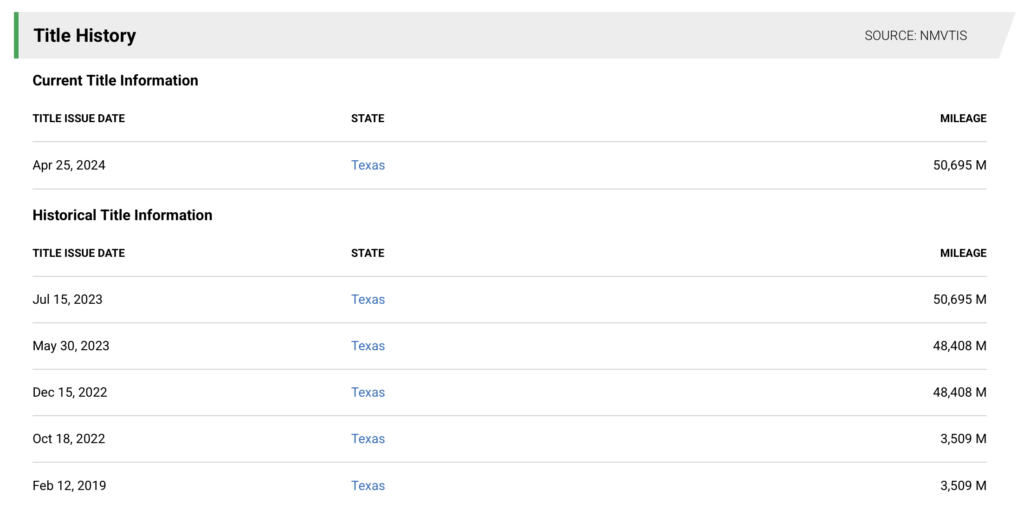
- Title history by state
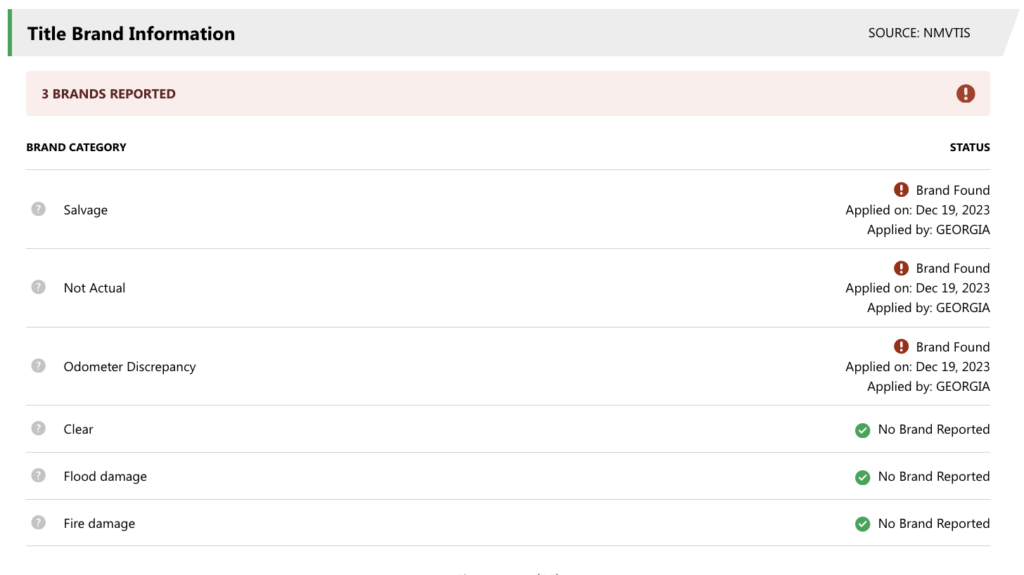
- Brand records (salvage, rebuilt, junk, flood, etc.)
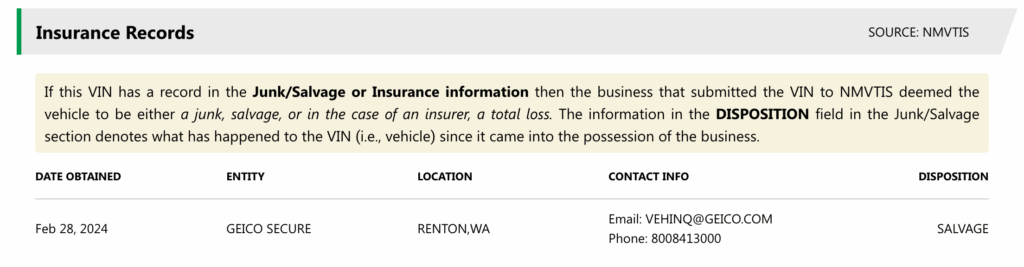
- Total loss records reported by insurers
- Theft status reported by law enforcement

NMVTIS does not include cosmetic damage details, maintenance records, or subjective condition ratings. Its role is verification and compliance, not marketing.
This distinction matters when choosing a provider and explaining reports to customers.
Official NMVTIS Report vs. Unverified VIN Services
Many online platforms advertise “real VIN checks,” but not all provide official data. This creates risk for dealers relying on fraudulent vehicle history services.
| Official NMVTIS Provider | Unverified VIN Service |
| ✅ Uses federally required data sources | ⚠️ Uses scraped or incomplete data |
| ✅ Accepted for dealer compliance | ⚠️ Not accepted for audits |
| ✅ Shows official title brands | ⚠️ May miss or hide brands |
| ✅ Transparent data sourcing | ⚠️ Data sources often unclear |
Using a fake vehicle report or an unsupported VIN lookup tool can expose dealers to penalties, buyer disputes, and regulatory action. For consumers, the risk is also high and related to misleading information or even stolen credit card details.
Practical Steps Dealers Should Take Now
Dealers don’t need to wait until enforcement begins to prepare. The following steps reduce risk immediately:
- Confirm your provider is NMVTIS-authorized
Not all VIN tools qualify for compliance use. - Standardize NMVTIS checks in your workflow
- Treat it as mandatory, just like odometer disclosure.
- Train staff on report interpretation
- Misunderstanding a brand can be as risky as missing it.
- Store reports with deal jackets
- Documentation matters during audits.
- Avoid free or “too cheap” VIN services
- Many are associated with VIN lookup scams or incomplete data.
These steps help dealers stay compliant while building buyer trust.
Consequences for Dealers Who Do Not Provide an NMVTIS Report
Dealers who fail to provide an official NMVTIS report or who use a fake or misleading vehicle history report may face serious consequences, including fines, license suspension or revocation, failed DMV audits, and civil lawsuits for misrepresentation or fraud.
Using non-authorized VIN services can also expose dealers to federal scrutiny, weaken legal defenses in buyer disputes, and cause long-term reputational damage. In many cases, lack of proper documentation is treated as non-compliance, even if the omission was unintentional.
How ClearVin Helps Dealers Stay Compliant
ClearVin provides access to official NMVTIS data in vehicle history reports, designed for both individual and business use.
With ClearVin, users can:
- Run official NMVTIS-based vehicle history reports.
- Use free tools like VIN Decoder, Recall Check, and Oregon License Plate Lookup.
- Access data from trusted sources, including state DMV, NHTSA, NVS, and salvage auctions.
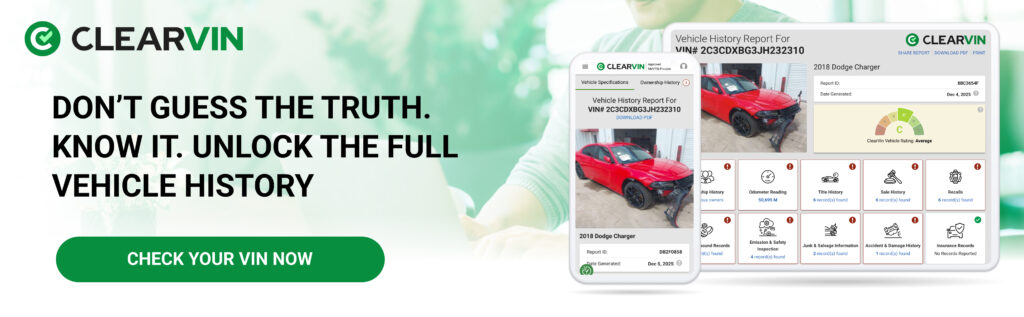
- Review title brands, total loss records, theft status, and ownership signals in one report. Click to open sample.
ClearVin focuses on transparency, clearly showing data sources and avoiding the risks associated with fake VIN report platforms or misleading vehicle history services. For car dealers, we offer fast access to reports in bulk and easy access to window stickers without a monthly commitment and under clear payment terms.
Final Thoughts
Oregon SB 840 makes one thing clear: vehicle history verification with NMVTIS is no longer optional for dealers. NMVTIS reports are becoming a standard part of compliance, not just a risk-management tool.
Dealers who prepare early can avoid penalties, reduce disputes, and operate with greater confidence in an increasingly regulated environment.
To get accurate and official vehicle history information, check your VIN with ClearVin today.