A California buyer spent three weeks negotiating on a 2020 BMW X5. The seller had documentation, service records, and a confident story. The price was firm at $48,000.
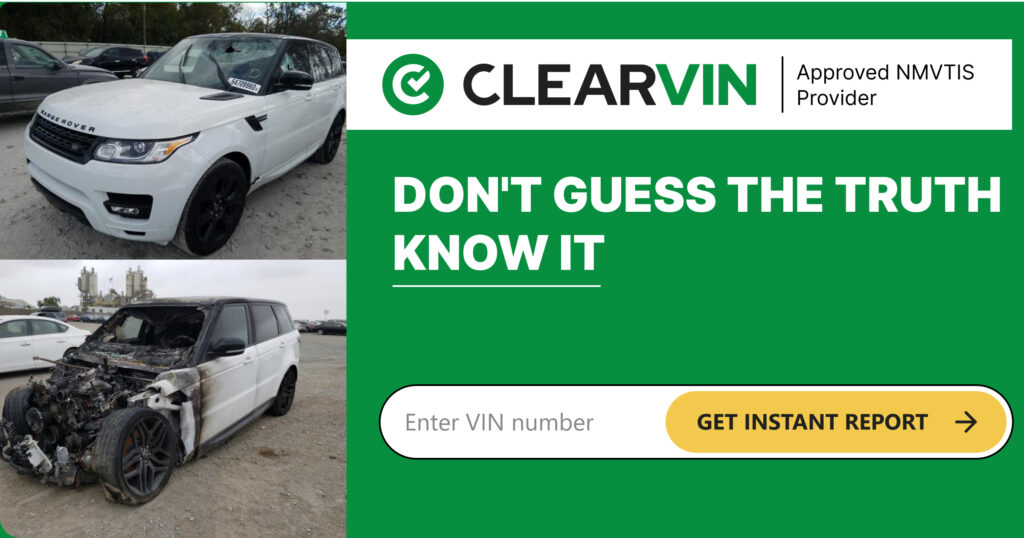
The buyer ran a ClearVin report the night before signing. It showed a Louisiana flood title, two prior insurance write-offs, and an odometer reading 31,000 miles higher than what the seller claimed. The deal was dead. The fraud was documented. The buyer kept his $48,000.
In today’s used car market, knowledge isn’t just power — it’s the difference between a smart purchase and an expensive mistake. A thorough vehicle history report by VIN can protect you from hidden title issues, undisclosed damage, and outright fraud before any money changes hands. Here’s how ClearVin was built, what makes it different, and why it consistently outperforms the alternatives.
Why a VIN History Report Matters
Every used vehicle has a story. The challenge is that the seller only tells you part of it. A VIN history report fills in the rest — pulling official records from government databases, insurance companies, and auction houses that sellers have no control over and can’t edit. Before you bid at auction, negotiate at a dealership, or wire money to a private seller, a vehicle history check answers the questions that matter most.
It uncovers accidents, flood damage, and odometer discrepancies that aren’t visible on a test drive. It confirms whether the title is clean or carries brands like salvage, rebuilt, or lemon law buyback — and whether any liens are attached that could complicate ownership transfer. It surfaces service records and maintenance history so you can assess whether the car was actually cared for. And for buyers who want to verify what came from the factory versus what a seller added or claims — a factory-installed options by VIN lookup confirms the vehicle’s exact original configuration.
Running a VIN number car history check before you commit isn’t an optional extra. It’s the foundation of any informed used vehicle purchase.
The Origin of ClearVin
ClearVin was founded by a team that saw a persistent problem in the used vehicle market.
The founders set out to build something different: a VIN lookup service that pulled real-time data from every authoritative source available — NMVTIS, NHTSA, all 50 state DMVs, insurance companies, and auction houses — and translated that raw data into a clear, actionable report that any buyer could understand without automotive expertise.
The early challenges were significant. Securing direct data partnerships, normalizing inconsistent formats across 50 state DMV systems, and building checksum-validated VIN decoders all required deep collaboration with government agencies, insurers, and salvage yards. A decade later, those partnerships are ClearVin’s foundation — and the reason our data is more current and comprehensive than services that rely on delayed data feeds.
How ClearVin Stands Out
Depth of Data
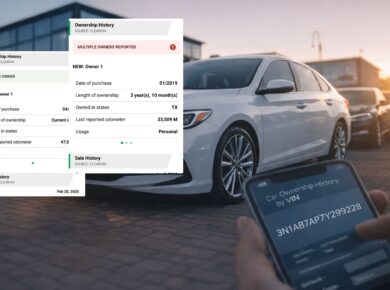
Most vehicle history services focus on title brands and accident records. ClearVin goes further. Our reports include lien and impound history, detailed recall entries with completion status, factory-installed options by VIN from manufacturer build sheets, ownership timeline with usage type (personal, fleet, rental, lease), odometer verification across DMV and service records, and auction history with sale prices — giving you a complete picture of both the vehicle’s legal status and its actual life.
Real-Time Updates
Static databases are one of the biggest weaknesses of legacy vehicle history services. A report pulled today on a vehicle that was totaled last month may show nothing — because the data hasn’t been updated.
ClearVin’s platform refreshes daily from direct data feeds, ensuring the most recent insurance write-offs, title transfers, and service events are reflected in every report. No more “no records found” results on vehicles with significant history that simply hasn’t propagated through a slow database yet.
Factory Option Decoding
Beyond history data, ClearVin’s VIN decoder breaks down the original build sheet — every factory option, package, and specification as ordered from the manufacturer.
This is particularly valuable when evaluating used vehicle pricing. A seller claiming a vehicle has the premium technology package, the towing package, and the panoramic sunroof deserves verification before those options influence your offer. The factory build sheet either confirms or contradicts the claim.
Dealer-Grade Tools for Business Buyers
Individual buyers and automotive businesses have different needs. ClearVin serves both.
For dealerships, fleet operators, and auction buyers processing high volumes, ClearVin offers bulk VIN upload capability, allowing hundreds of history report requests to be processed simultaneously. The VIN sales history check feature is built specifically for buyers who need to verify vehicles quickly during live bidding — fast enough to inform a decision before the hammer falls.
ClearVin vs. Carfax: The Key Differences
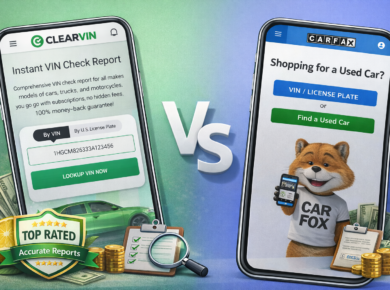
The most common question buyers ask when evaluating vehicle history services is how ClearVin compares to Carfax. Here’s an honest comparison.
| Feature | ClearVin | Carfax |
|---|---|---|
| NMVTIS Integration | Full, direct government feeds | Partial, with reporting delays |
| Factory Build Sheet / Options | Comprehensive factory-installed options by VIN | Limited |
| Bulk Lookup & Auction Tools | Yes — built for dealer volume | Limited |
| Pricing | $17.99 per report, no hidden fees & volume discounts | $39.99+ per report, tiered plans |
| Vehicle Service History | DMV and service network records | Often user-submitted or dealer-provided |
| Free Preview | Yes — before purchase | Not available |
| Canadian Vehicles | Yes | Yes |
| Money-Back Guarantee | 100% | Limited |
The bottom line: ClearVin provides the same core title and accident data as Carfax — sourced from the same NMVTIS government database — at 50-70% lower cost, with additional features that Carfax doesn’t offer: factory option decoding, auction tools, bulk lookups, and a free preview before you pay.
How to Use a ClearVin Report to Negotiate a Better Price
A vehicle history report isn’t just a risk-management tool — it’s a negotiation asset.
Before you step onto the lot or contact the seller, run the VIN report. Every issue it surfaces is a documented, factual basis for negotiating the price down — not a subjective complaint the seller can dismiss.
Accident history gives you documented evidence of prior damage. If the insurance claim was $8,000, that’s a factual data point about repair costs the vehicle has already incurred — and potentially about structural issues that affect its long-term reliability.
Service record gaps indicate periods where maintenance may have been deferred. A vehicle with three years of missing oil change records isn’t as well-maintained as a vehicle with consistent documented service. That difference has real cost implications.
Title brands directly reduce market value. A rebuilt title vehicle is worth 20-40% less than a comparable clean title vehicle — documented by the title record, not your opinion. Present the title brand and the market value differential to justify your offer.
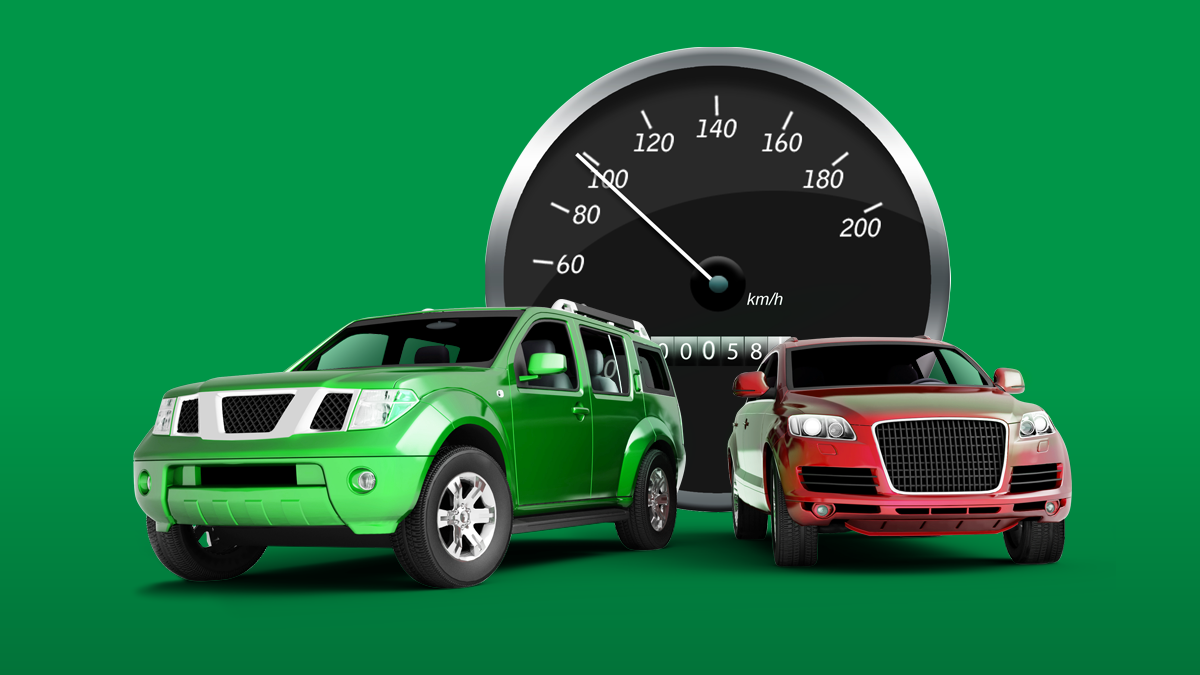
Odometer discrepancies are the most powerful negotiating point if they exist. An inconsistency between the stated mileage and the recorded DMV history is potential fraud — and potential grounds for walking away entirely, not just negotiating lower.
Armed with a ClearVin report, you negotiate from facts. The seller negotiates from story. Facts win.
Our Mission and Principles
ClearVin was built on a straightforward belief: every buyer deserves access to the same information that dealers and insurers use to evaluate vehicles. Information asymmetry — where sellers know more than buyers — is what makes used car fraud possible. Closing that gap is what we do.
Accuracy and Reliability Every data source is verified. VIN checksums are validated at intake. Discrepancies between data sources are flagged rather than hidden.
Clarity and Ease Reports are designed so buyers with no automotive background can understand what they’re looking at. Summary alerts at the top surface the most important findings immediately. Detailed sections are available for buyers who want to go deeper.
Comprehensive Coverage U.S. and Canadian vehicles from 1981 to present, across 70+ data sources including every state DMV, major insurance carriers, salvage auctions, and NMVTIS.
Responsive Support Our team is available to help interpret reports, explain title designations, and resolve data discrepancies. We don’t just hand you a report and disappear.
ClearVin Today
What started as a response to a gap in the market is now the platform trusted by over 500,000 buyers, dealers, and automotive businesses across the U.S. and Canada.
Private buyers use ClearVin to protect themselves on individual used car purchases. Dealers use our bulk tools to verify inventory before it goes on the lot. Auction buyers use our real-time data to make bidding decisions in seconds. Lenders use our title data to underwrite vehicle-secured loans. Fleet operators use our ownership history data to assess acquisition candidates.
Across every use case, the core value is the same: verified data from authoritative sources, delivered fast enough to inform a real decision.